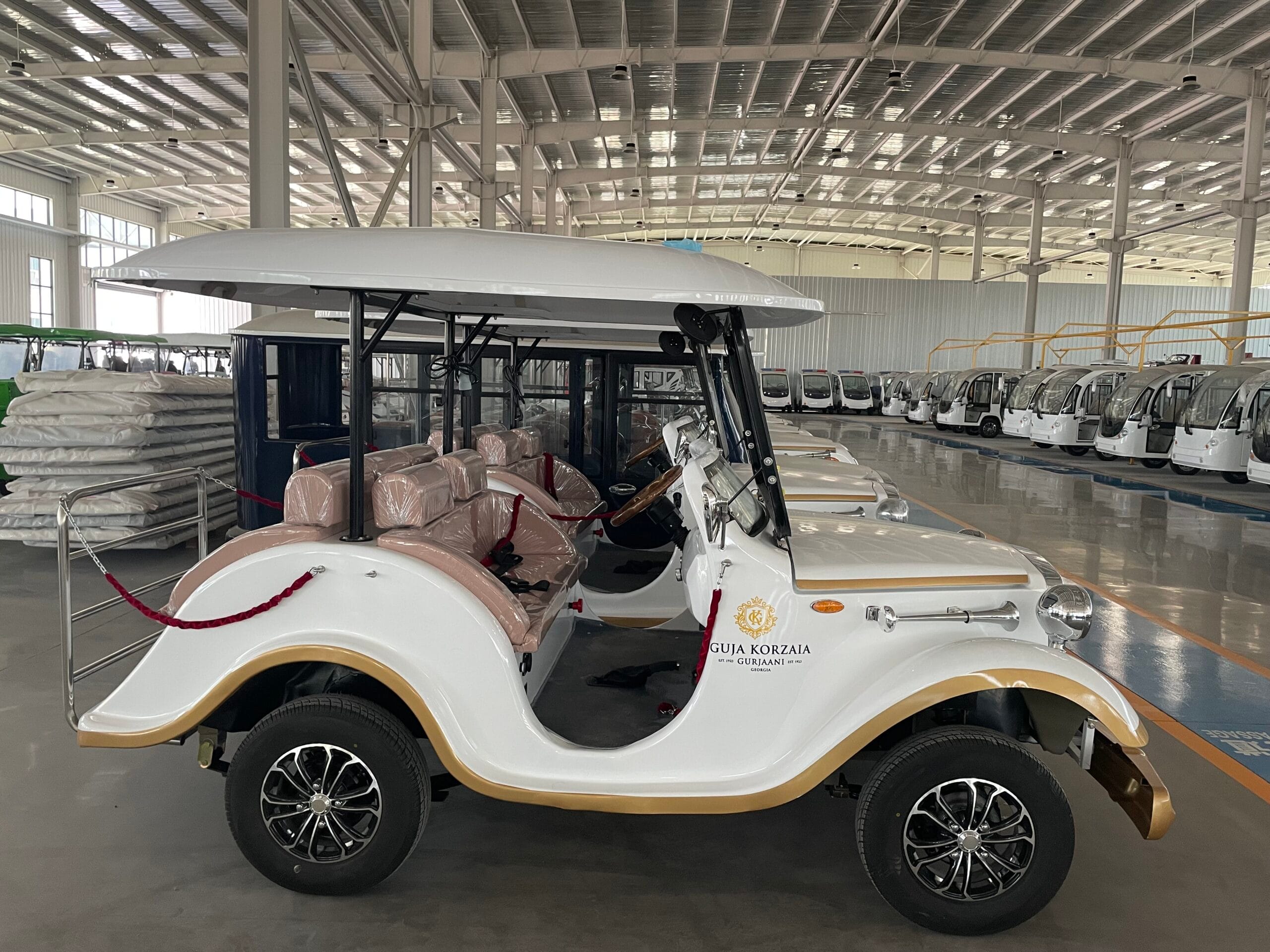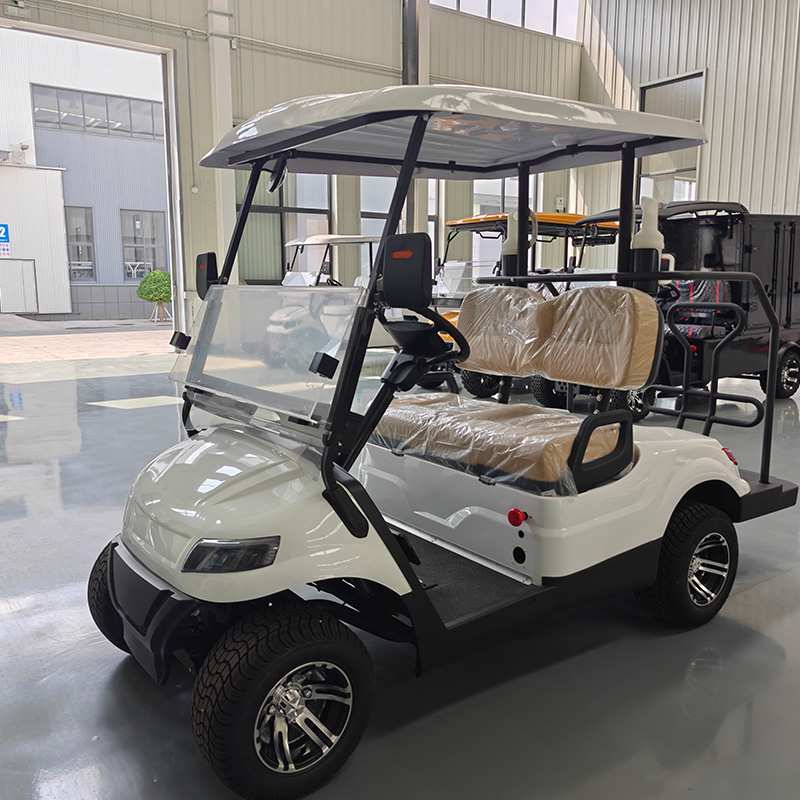
Introduction
Modern farms and golf courses require reliable transportation solutions that combine efficiency, flexibility, and ease of operation. From moving tools and supplies across agricultural land to transporting equipment and maintaining beautiful golf course landscapes, the right utility vehicle can make daily work faster and more convenient. A Golf Cart Utility Vehicle for Farms and Golf Courses is a practical solution designed to support a wide range of outdoor tasks while helping businesses improve productivity and reduce unnecessary transportation costs.
Unlike traditional passenger vehicles, a utility golf cart is designed around practical working needs. It can transport workers, carry maintenance equipment, move small loads, and travel between different work areas without requiring the space or operating costs associated with a larger vehicle. Depending on its configuration, a Golf Cart Utility Vehicle for Farms and Golf Courses may include a rear cargo bed, a durable chassis, all-terrain tires, an electric powertrain, or additional storage features.
For farm owners, these vehicles can help employees move between greenhouses, barns, orchards, storage buildings, and irrigation systems. For golf course managers, they provide convenient transportation for groundskeepers, maintenance teams, and other staff members who need to cover large areas throughout the day.
The growing demand for efficient and environmentally conscious transportation has also increased interest in electric utility golf carts. Electric models can offer quiet operation, convenient charging, and reduced local exhaust emissions compared with gasoline-powered alternatives. These advantages make them especially attractive in environments where noise control, visitor comfort, and routine maintenance are important considerations.
However, choosing the right vehicle requires more than comparing prices or exterior designs. Buyers need to evaluate load capacity, terrain compatibility, battery performance, cargo configuration, safety features, and long-term operating costs.
This guide explains how a Golf Cart Utility Vehicle for Farms and Golf Courses can support daily operations, which features matter most, how different applications affect vehicle selection, and what businesses should consider before purchasing a utility golf cart.
What Is a Golf Cart Utility Vehicle for Farms and Golf Courses?
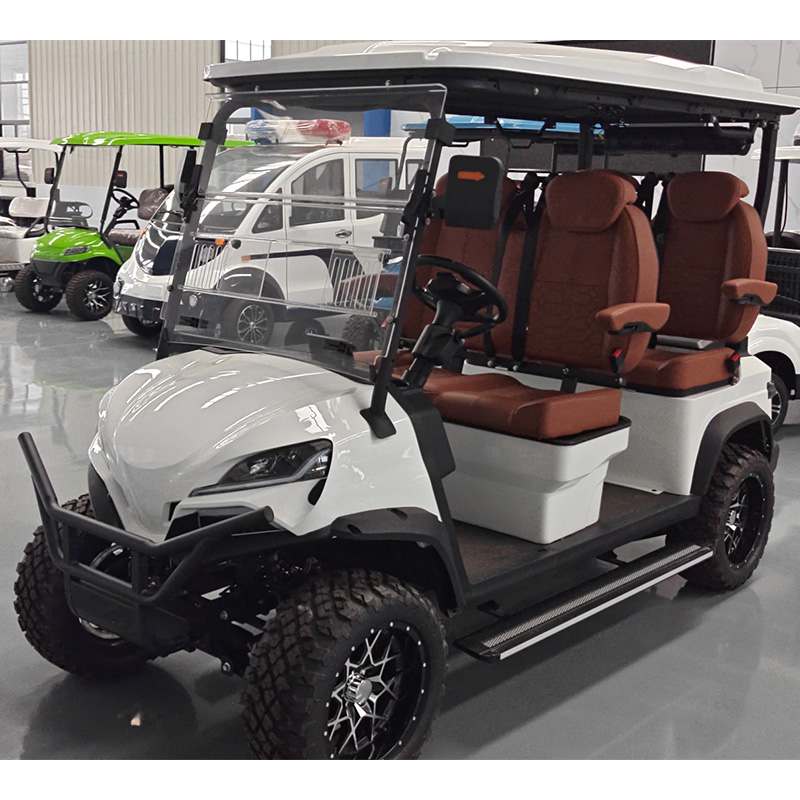
A Golf Cart Utility Vehicle for Farms and Golf Courses is a compact transportation vehicle designed to perform practical work in outdoor environments. While traditional golf carts are primarily intended to transport golfers and their equipment, utility versions are adapted for carrying tools, materials, supplies, and maintenance personnel.
These vehicles commonly feature a reinforced frame, practical seating arrangements, accessible controls, and optional cargo areas. Some models have an open rear platform, while others include a box-shaped cargo bed suitable for transporting equipment and supplies.
Depending on the intended application, buyers can choose electric or gasoline-powered configurations, two-wheel-drive or four-wheel-drive systems where available, and different tire designs for specific terrain conditions.
A utility golf cart can be particularly useful in locations where full-size trucks are unnecessarily large, expensive, or inconvenient. Narrow farm paths, landscaped golf course areas, and pedestrian-oriented work zones often require a smaller vehicle that can move efficiently without occupying excessive space.
The main purpose of a Golf Cart Utility Vehicle for Farms and Golf Courses is to provide dependable short-distance transportation while supporting productive daily operations.
Key Characteristics of a Utility Golf Cart
Several characteristics distinguish utility golf carts from standard passenger golf carts.
| Feature | Description | Practical Benefit |
|---|---|---|
| Cargo bed | Rear platform or enclosed cargo box | Transports tools, supplies, and materials |
| Compact dimensions | Smaller footprint than many commercial vehicles | Helps navigate narrow paths |
| Electric powertrain | Battery-powered motor on electric models | Quiet operation and reduced local emissions |
| Durable chassis | Structure designed for routine working conditions | Supports regular utility applications |
| Work-oriented tires | Tires selected for grass, gravel, or mixed surfaces | Improves suitability for different terrain |
| Multiple seating options | Configurations for operators and passengers | Supports different work teams |
| Optional accessories | Canopies, storage boxes, racks, and other equipment | Adapts the vehicle to specific tasks |
| Simple controls | Accessible steering, braking, and driving controls | Supports convenient daily operation |
Not every model includes every feature. Buyers should confirm specifications with the manufacturer, especially when the vehicle will operate on slopes, carry heavy loads, or travel over uneven ground.
Why Farms Need a Golf Cart Utility Vehicle
Agricultural operations involve numerous short-distance transportation tasks. Workers frequently move between fields, equipment storage areas, irrigation systems, greenhouses, barns, and packing facilities. Walking between these locations can consume valuable time, while using a full-size truck for every task may be unnecessarily expensive.
A Golf Cart Utility Vehicle for Farms and Golf Courses can provide a convenient middle ground between walking and operating a larger commercial vehicle.
Efficient Transportation Across Agricultural Land
Farm properties can cover substantial areas, and daily work often requires employees to visit multiple locations. A utility golf cart helps workers travel between these areas while carrying the supplies they need.
For example, a greenhouse worker may need to inspect several growing sections, collect small tools, and deliver maintenance materials. Instead of carrying everything by hand, the worker can transport supplies in a utility vehicle and complete multiple tasks during one trip.
Orchard managers may use utility carts to inspect trees, monitor irrigation equipment, and move lightweight harvesting supplies. Livestock facilities can also benefit from compact vehicles for routine inspections and the transportation of smaller items.
The result depends on the property’s layout and the vehicle’s capabilities, but reducing unnecessary walking and repeated trips can make daily workflows more efficient.
Convenient Transportation of Tools and Materials
Agricultural work requires tools, hoses, containers, protective equipment, replacement parts, and many other supplies. A vehicle equipped with a cargo bed helps workers keep frequently used items together.
A Golf Cart Utility Vehicle for Farms and Golf Courses with a suitable cargo configuration can carry items such as:
- Hand tools and maintenance equipment
- Irrigation components and small replacement parts
- Seeds and lightweight agricultural supplies
- Feed containers and routine livestock-care materials
- Cleaning equipment and protective clothing
- Small packages and supplies for farm shops
- Inspection equipment used by supervisors
Cargo limits must always be respected. Heavy machinery, large fertilizer loads, bulky construction materials, and other high-weight items may require a purpose-built agricultural vehicle or a larger transport solution.
Support for Greenhouses and Nurseries
Greenhouses and nurseries often contain narrow internal paths, growing tables, irrigation equipment, and delicate plants. Large vehicles can be difficult to maneuver in these environments.
A compact utility golf cart can help employees move between growing areas and storage locations, provided that its dimensions, turning radius, and ground clearance suit the available space.
Electric models may be particularly useful in enclosed or partially enclosed growing environments because they do not produce tailpipe exhaust during operation. Adequate ventilation, charging precautions, and battery-system requirements still need to be considered.
For nurseries, the cargo area can be configured to transport plant trays, pots, labels, small tools, and other supplies. Protective restraints or dedicated racks may be necessary to prevent plants from shifting during movement.
Improve Farm Maintenance and Inspection
Routine maintenance is essential for agricultural productivity. Irrigation systems, fences, drainage channels, storage buildings, and access roads all require regular inspection.
A Golf Cart Utility Vehicle for Farms and Golf Courses allows maintenance personnel to carry inspection tools and travel between work areas more conveniently.
For instance, an employee checking irrigation lines can carry replacement fittings, measuring equipment, and basic repair tools in one vehicle. This reduces the need to return repeatedly to a storage building.
Farm supervisors can also use utility carts to inspect property boundaries, monitor work progress, and communicate with employees across the site.
Reduce Unnecessary Use of Larger Vehicles
Full-size pickups and agricultural utility vehicles are valuable for heavy-duty applications, but they may not be the most efficient choice for every task.
Using a smaller vehicle for lightweight transportation can help preserve larger equipment for jobs that require more power, towing capacity, or cargo space.
Electric utility carts may also have lower energy costs per short trip than gasoline-powered alternatives, although the actual difference depends on electricity prices, fuel prices, vehicle efficiency, maintenance, and daily usage.
The most effective strategy is to match each vehicle to its intended workload rather than expecting one vehicle to perform every task.
How Golf Courses Benefit From Utility Golf Carts
Golf courses must maintain attractive landscapes while providing a comfortable experience for players, employees, and visitors. Groundskeeping teams work across large areas and regularly transport equipment, materials, and replacement parts.
A Golf Cart Utility Vehicle for Farms and Golf Courses can support these operations without requiring a full-size truck for every maintenance task.
Efficient Golf Course Groundskeeping
Golf course maintenance includes mowing, trimming, irrigation inspections, bunker maintenance, landscaping, and debris removal. Many of these activities require employees to move tools between different locations.
A utility cart with a cargo bed allows staff to transport small equipment, replacement parts, cleaning materials, and landscaping supplies.
Groundskeepers can use these vehicles to move between fairways, greens, paths, and maintenance facilities. The compact design of many utility carts can make them easier to maneuver around designated maintenance routes than larger vehicles.
However, the vehicle must be selected carefully for grass conditions and ground pressure. Sensitive turf can be damaged by unsuitable tires, excessive weight, or operation when the ground is wet.
Quiet Transportation for Golf Course Environments
Noise management is an important consideration on golf courses. Players often expect a peaceful environment, especially during early-morning rounds and practice sessions.
Electric utility golf carts generally operate more quietly than gasoline-powered models. This makes them attractive for maintenance activities near playing areas, clubhouses, and residential developments.
A Golf Cart Utility Vehicle for Farms and Golf Courses powered by electricity can move personnel and supplies without engine exhaust at the point of use.
Electric vehicles are not completely silent, and tire noise, warning signals, and other operating sounds remain present. Nevertheless, reduced motor noise can help golf course operators maintain a quieter environment.
Transporting Maintenance Equipment
Golf courses use a wide variety of tools and supplies. These may include trimmers, hand tools, irrigation fittings, fertilizers in appropriately controlled quantities, sand containers, cleaning products, and signage materials.
A utility cart can be configured with storage compartments, racks, or cargo boxes to support these needs.
The right configuration depends on the equipment being transported. Long tools may require dedicated holders, while loose materials may need a secure cargo box. Chemicals should be transported according to their safety data sheets and applicable handling requirements.
A properly equipped Golf Cart Utility Vehicle for Farms and Golf Courses can reduce repeated trips to maintenance buildings and help teams organize their daily work.
Support for Clubhouse and Facility Operations
Golf course operations extend beyond the fairways. Employees may need to deliver supplies to the clubhouse, inspect parking areas, maintain walking paths, and assist with event preparation.
Utility carts can support these tasks when the route is suitable and the vehicle is authorized for the intended use.
Possible applications include moving event materials, transporting cleaning equipment, delivering small maintenance supplies, and helping staff inspect outdoor facilities.
For public-facing tasks, operators should consider passenger comfort, weather protection, accessibility, and separation from pedestrian traffic.
Protecting Landscapes and Sensitive Turf
A major advantage of choosing the correct utility vehicle is the potential to limit unnecessary disturbance to landscaped areas.
Compact vehicles may have a smaller footprint than full-size trucks, but their impact depends on total weight, tire design, axle loading, and ground conditions.
When choosing a Golf Cart Utility Vehicle for Farms and Golf Courses, course managers should evaluate the following factors:
- Tire tread suitable for grass and designated paths
- Ground clearance appropriate for uneven surfaces
- Weight distribution that minimizes unnecessary turf pressure
- Turning capability for narrow maintenance routes
- Traction appropriate for damp grass and gentle slopes
- Manufacturer guidance regarding allowable gradients and loads
Operating heavy vehicles on saturated turf should generally be avoided when it could cause rutting or surface damage.
Electric vs. Gasoline Golf Cart Utility Vehicles
One of the most important purchasing decisions is choosing between an electric and a gasoline-powered model.
Both options can be useful, but their strengths differ. The best choice depends on operating hours, terrain, charging access, fuel availability, maintenance resources, and the types of loads being transported.
Electric Utility Golf Carts
Electric utility carts use rechargeable batteries to power an electric motor. They are commonly considered for golf courses, resorts, campuses, greenhouses, and farms that need regular short-distance transportation.
Key advantages include quiet operation, no tailpipe emissions during use, and fewer routine engine-related maintenance tasks.
Electric models may be especially convenient when vehicles return to a central facility at predictable times. Staff can charge the vehicles between shifts or overnight, depending on battery capacity and charging requirements.
Battery chemistry matters. Lead-acid batteries and lithium-ion batteries have different charging characteristics, maintenance requirements, costs, and service lives. Lithium-ion models may offer advantages in charging speed and usable energy, while lead-acid systems may have a lower initial purchase price.
Buyers should compare complete battery specifications rather than relying solely on advertised range.
Gasoline Utility Golf Carts
Gasoline-powered utility carts use combustion engines and require fuel, engine lubrication, and associated maintenance.
They may be appropriate for locations where electrical charging infrastructure is limited or where extended operating periods make refueling more convenient than charging.
However, gasoline models generally produce more noise and tailpipe emissions during operation. They also require engine-related servicing, including oil changes and other scheduled maintenance.
Whether a gasoline-powered Golf Cart Utility Vehicle for Farms and Golf Courses is preferable depends on the work environment and the specific model’s capabilities.
Electric and Gasoline Comparison
| Comparison Factor | Electric Utility Cart | Gasoline Utility Cart |
|---|---|---|
| Operating noise | Generally quieter | Generally louder |
| Tailpipe emissions | None during vehicle operation | Present during operation |
| Energy source | Rechargeable battery | Gasoline |
| Refueling or charging | Requires suitable charging access | Requires fuel access |
| Routine maintenance | Battery, tires, brakes, and electrical systems | Engine, fuel system, tires, brakes, and other components |
| Short-distance use | Often well suited | Also suitable |
| Long operating shifts | Depends on battery capacity and charging opportunities | May suit shifts requiring quick refueling |
| Indoor or enclosed-area use | Often preferable, subject to battery and safety requirements | Requires careful exhaust and ventilation management |
| Initial cost | Varies by battery and configuration | Varies by engine and configuration |
| Long-term operating cost | Depends on electricity, battery replacement, and maintenance | Depends on fuel, servicing, and maintenance |
There is no universally superior option. Businesses should estimate total ownership costs over the expected service period and evaluate how the vehicle will actually be used.
Important Features to Consider Before Buying
Selecting the right Golf Cart Utility Vehicle for Farms and Golf Courses requires a clear understanding of the working environment. A vehicle that performs well on flat golf course paths may not be suitable for a steep farm road or muddy agricultural field.
Cargo Capacity and Load Distribution
Cargo capacity is one of the first specifications buyers should examine.
A utility cart’s maximum payload may include passengers, cargo, and accessories, depending on how the manufacturer defines its rating. Buyers should confirm whether the published figure refers to cargo capacity alone or total allowable vehicle load.
Overloading can affect braking, steering, suspension, stability, and component life.
Load distribution is equally important. Heavy materials should be positioned according to manufacturer guidance, and cargo should be secured to prevent shifting during turns or sudden stops.
| Cargo Requirement | Recommended Consideration |
|---|---|
| Small hand tools | Compact cargo bed or storage compartment |
| Irrigation supplies | Organized storage with secure restraints |
| Plant trays and nursery materials | Flat platform or suitable racks |
| Cleaning and maintenance supplies | Lockable or covered storage where needed |
| Landscaping materials | Cargo capacity and bed dimensions |
| Bulky equipment | Measure equipment and verify loading limits |
| Heavy materials | Confirm rated payload and axle limits before purchase |
For example, a farm transporting lightweight tools may need a smaller cargo bed, while a golf course moving bulky maintenance supplies may benefit from a larger platform.
The Golf Cart Utility Vehicle for Farms and Golf Courses should match the actual dimensions and weight of the items it carries.
Battery Capacity and Driving Range
For electric vehicles, battery capacity is a major factor in daily usability.
Advertised range figures may be measured under favorable test conditions. Actual performance can vary with passenger and cargo weight, terrain, temperature, tire pressure, driving speed, stopping frequency, and battery condition.
A farm with long routes between buildings may need greater battery capacity than a small nursery with short, predictable trips.
Golf courses should consider whether maintenance staff can charge vehicles during breaks or return them to a central charging area between shifts.
Before purchasing, estimate daily distance and operating time. Add a reasonable reserve for unexpected trips and changing operating conditions.
Terrain and Traction
Terrain suitability is especially important on farms.
Flat paved paths, gravel roads, muddy tracks, grass, and slopes create different traction and stability demands. A standard golf cart may perform adequately on smooth surfaces but struggle in conditions that require greater ground clearance or specialized tires.
A Golf Cart Utility Vehicle for Farms and Golf Courses intended for mixed terrain should be evaluated for tire design, suspension, clearance, traction, braking performance, and manufacturer-approved operating gradients.
Four-wheel drive may be useful for certain applications, but it does not automatically make a vehicle safe on steep or slippery surfaces. Operating limits still apply.
Passenger Seating and Operator Comfort
Some utility carts are primarily designed for a single operator, while others provide additional seating.
If multiple employees regularly travel together, a vehicle with suitable seating may improve workflow. However, all passengers must use designated seats and restraints where provided.
Operator comfort also matters during long workdays. Adjustable seating, easy-to-reach controls, clear visibility, and a suitable driving position can reduce fatigue.
For operations exposed to rain or strong sunlight, optional canopies, windshields, doors, and weather enclosures may improve working conditions.
Cargo Bed Design
Cargo bed design affects how efficiently a vehicle can perform specific tasks.
An open flatbed provides flexibility for irregularly shaped equipment. A box-style cargo bed can help contain loose materials. Lockable storage may be valuable for tools that must remain secure between shifts.
Some models offer tilting beds, removable sides, or specialized mounting points. These features should be assessed against the intended load and the manufacturer’s instructions.
Do not assume that a tilting bed is designed for every type of unloading task. Safe unloading procedures and load limits remain essential.
Braking and Safety Systems
A utility vehicle should have braking performance appropriate for its maximum permitted load and operating environment.
Buyers should examine the braking system, parking brake, lights, mirrors, seat belts, warning signals, and other safety equipment. The exact requirements depend on the model, location, and intended use.
A Golf Cart Utility Vehicle for Farms and Golf Courses operating near employees, golfers, farm machinery, or pedestrians should also have suitable visibility and a clear traffic-management plan.
Safety equipment cannot compensate for excessive speed, overloading, or operation outside the manufacturer’s limits.
Practical Applications Across Different Work Environments
The versatility of a Golf Cart Utility Vehicle for Farms and Golf Courses makes it suitable for many types of properties. However, each environment has different transportation needs.
Fruit Orchards and Vineyards
Orchards and vineyards often have long rows of plants separated by narrow access lanes. Workers may need to inspect crops, monitor irrigation, deliver small supplies, and carry tools between sections.
A compact utility vehicle can support these tasks when the row spacing and surface conditions are suitable.
Buyers should measure the narrowest access points before choosing a model. Tire width, overall dimensions, turning radius, and ground clearance can determine whether a vehicle can move between rows without damaging plants.
A cargo bed with appropriate restraints can also help transport harvesting accessories and inspection equipment.
Livestock Farms
Livestock operations involve routine inspections of barns, fencing, water systems, feeding areas, and animal enclosures.
A Golf Cart Utility Vehicle for Farms and Golf Courses can help employees carry tools and move between facilities.
However, animal behavior, hygiene, noise sensitivity, and access conditions must be considered. Vehicles should be operated at controlled speeds, and routes should avoid unnecessary disturbance to animals.
Transporting feed, veterinary materials, or cleaning products requires appropriate containment and separation where necessary.
Greenhouses and Plant Nurseries
Nurseries often require the transportation of pots, trays, soil products, tools, and small plant batches.
A compact electric utility cart may suit paved or reinforced greenhouse routes, particularly where quiet operation is beneficial.
The vehicle’s width and turning radius should match the layout, and fragile products may require padded racks or secure storage to prevent damage.
Battery charging should take place in an appropriate designated area according to the battery manufacturer’s instructions.
Golf Course Maintenance Departments
Golf course maintenance departments may use utility carts to transport hand tools, irrigation supplies, signage, and cleaning equipment.
A model with a durable cargo bed and turf-appropriate tires can help staff cover more ground during routine maintenance.
Courses with extensive properties may benefit from assigning vehicles to specific teams, such as irrigation technicians, landscaping employees, and facility maintenance workers.
This arrangement can simplify equipment organization and reduce unnecessary vehicle movements.
Resorts, Parks, and Outdoor Facilities
Although the main applications are farms and golf courses, similar vehicles may also support resorts, parks, botanical gardens, and large outdoor campuses.
Employees can use utility carts to carry supplies, inspect pathways, deliver materials, and perform routine maintenance.
Before using a cart in public areas, operators should verify applicable vehicle rules, speed restrictions, pedestrian separation requirements, and accessibility considerations.
How to Calculate the Total Cost of Ownership
The purchase price is only one part of the cost of a Golf Cart Utility Vehicle for Farms and Golf Courses.
Businesses should consider energy, maintenance, replacement parts, tires, battery replacement, downtime, insurance where applicable, and the expected service life.
Initial Purchase Cost
The initial price depends on the vehicle’s size, powertrain, battery type, cargo bed, seating configuration, tires, and optional accessories.
A basic model may have a lower purchase price, while a vehicle equipped with a larger battery, specialized cargo equipment, or enhanced terrain capability may cost more.
Buyers should compare models with similar payload ratings, battery specifications, safety equipment, and warranty coverage.
Energy and Fuel Expenses
Electric models require electricity, while gasoline models require fuel.
For an electric vehicle, a simple estimate of charging cost is:
Electricity cost per charge = electricity price per kWh × electricity consumed in kWh.
For example, if charging consumes 5 kWh and electricity costs $0.25 per kWh, the energy cost for that charging session is $1.25.
Actual consumption from the electricity supply may be higher than the battery energy delivered because charging involves losses.
For a gasoline model, estimated fuel cost can be calculated using fuel consumed per operating hour and the local price per unit of fuel.
These estimates should use actual operating data whenever possible.
Maintenance and Replacement Costs
Electric vehicles generally avoid routine engine oil changes and several other combustion-engine maintenance tasks. Nevertheless, they still require inspections, tire replacement, brake servicing, and attention to electrical components.
Battery replacement can be a significant expense, particularly if the vehicle is heavily used or poorly maintained.
Gasoline models require additional engine and fuel-system maintenance, although their overall maintenance costs vary by model and workload.
A reliable cost comparison should include all expected expenses rather than focusing only on fuel or electricity.
Illustrative Ownership Cost Comparison
The following table demonstrates a hypothetical calculation method. These numbers are examples, not market quotations or predictions for a particular vehicle.
| Cost Category | Electric Model | Gasoline Model |
|---|---|---|
| Initial purchase price | $8,000 | $6,500 |
| Annual energy or fuel cost | $300 | $1,200 |
| Annual routine maintenance | $350 | $650 |
| Annual tire and other wear costs | $250 | $250 |
| Estimated annual operating cost | $900 | $2,100 |
| Three-year operating cost | $2,700 | $6,300 |
| Purchase plus three-year operating cost | $10,700 | $12,800 |
In this example, the electric model costs $1,500 more initially but has lower estimated operating expenses.
The figures exclude financing, insurance, taxes, downtime, resale value, charging equipment, and possible battery replacement. Actual results may differ substantially.
The lesson is straightforward: calculate the complete ownership cost using realistic local prices and the expected usage pattern.
Maintenance Tips for Long-Term Performance
Regular maintenance helps a Golf Cart Utility Vehicle for Farms and Golf Courses remain reliable and can reduce avoidable downtime.
The maintenance schedule should always follow the manufacturer’s instructions. Different battery systems, motors, braking systems, and vehicle configurations require different procedures.
Inspect Tires and Wheels
Tires influence traction, stability, braking, and ride quality.
Check tire pressure according to the manufacturer’s specifications and inspect the tread for excessive wear, cuts, punctures, and embedded debris.
Farm vehicles may encounter stones, thorns, rough gravel, and other hazards. Golf course vehicles may operate on delicate turf where unsuitable tire pressure or tread can cause damage.
Wheel fasteners should be inspected according to the recommended service schedule.
Monitor Battery Condition
Electric utility carts require appropriate battery care.
For lithium-ion batteries, follow the specified charging limits, temperature requirements, and storage recommendations. For lead-acid batteries, follow the manufacturer’s procedures for charging, terminal inspection, and any required electrolyte maintenance.
Keep charging areas clean, dry, and appropriately ventilated according to the battery system’s safety requirements.
Use compatible chargers and avoid damaged cables or unauthorized electrical modifications.
Check Brakes and Steering
Brakes and steering systems are essential safety components.
Inspect them regularly for unusual noises, changes in pedal feel, steering looseness, or reduced stopping performance. Any suspected fault should be addressed before the vehicle returns to service.
A loaded utility cart may behave differently from an unloaded passenger cart, so maintenance checks should consider the vehicle’s normal working conditions.
Clean the Cargo Bed and Chassis
Agricultural dirt, plant residue, fertilizer particles, grass clippings, and other debris can accumulate on the vehicle.
Cleaning the cargo area helps protect transported goods and makes it easier to identify cracks, corrosion, or damage.
Use cleaning methods approved by the manufacturer. Avoid directing high-pressure water at sensitive electrical components, connectors, bearings, or battery enclosures unless the vehicle is specifically designed for that exposure.
Maintain Service Records
Maintenance records help businesses track recurring problems, schedule inspections, and estimate long-term operating costs.
A simple record should include:
| Maintenance Item | Suggested Record |
|---|---|
| Tire inspection | Date, pressure, and visible wear |
| Brake inspection | Inspection date and any repairs |
| Battery maintenance | Charging issues and service history |
| Steering inspection | Observed problems and corrective actions |
| Cleaning | Date and any damage discovered |
| Scheduled servicing | Service date, parts, and labor |
| Repairs | Fault description and replacement components |
A structured maintenance program can help fleet managers identify vehicles that need attention before a minor problem causes a larger operational disruption.
Safety Considerations for Farms and Golf Courses
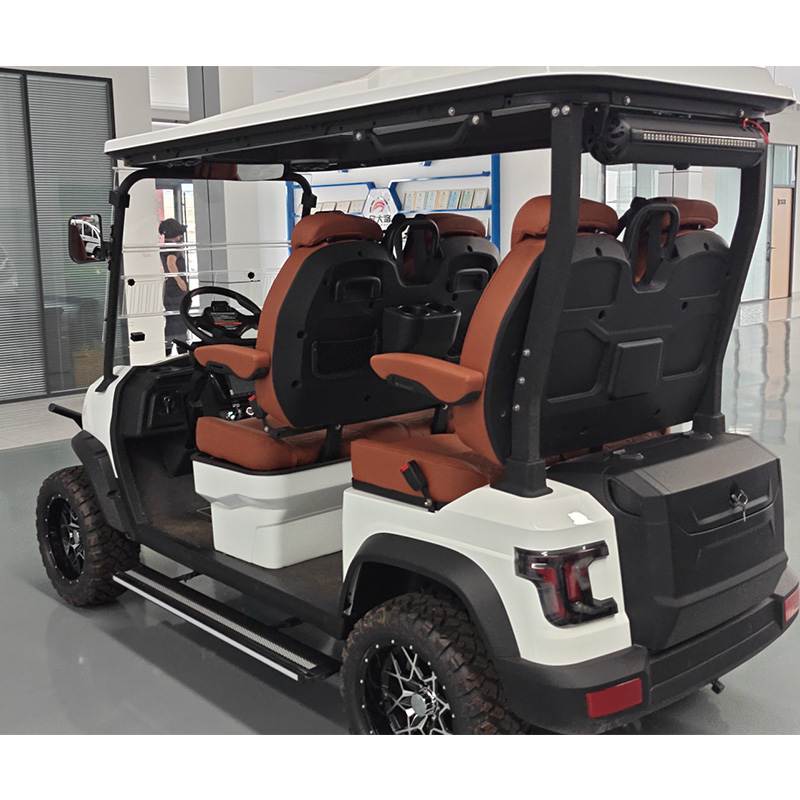
A utility golf cart is a working vehicle, not a substitute for every type of agricultural or commercial transport equipment. Safe operation requires suitable training, sensible routes, appropriate loading, and regular maintenance.
Follow Rated Load Limits
Never exceed the vehicle’s maximum permitted load.
The allowable load may include the operator, passengers, cargo, and accessories. Confirm how the manufacturer defines payload and gross vehicle weight before transporting materials.
Excessive weight can reduce braking performance, damage the suspension, and increase rollover risk.
Operate Carefully on Slopes
Slopes, wet grass, loose soil, and uneven surfaces can increase the risk of loss of traction or rollover.
Operators should follow the manufacturer’s slope limits and instructions for traveling uphill, downhill, and across inclines. Avoid sudden turns and abrupt acceleration, especially when carrying cargo.
A Golf Cart Utility Vehicle for Farms and Golf Courses should not be assumed to have the same climbing ability as a specialized off-road vehicle.
Secure All Cargo
Unsecured tools and supplies can fall from the vehicle during turns or braking.
Use appropriate restraints, racks, containers, and tie-down points. Keep cargo within the designated bed and avoid obstructing the operator’s view.
Heavy items should be positioned according to the manufacturer’s loading guidance to preserve stability.
Separate Vehicles From Pedestrians
Golf courses often have golfers and maintenance workers sharing nearby areas. Farms may have workers, visitors, animals, and large machinery operating on the same property.
Establish clear vehicle routes, speed limits, parking areas, and right-of-way procedures.
Operators should remain alert at intersections and around blind corners. Additional warning signals, mirrors, or lights may be appropriate depending on the environment.
Confirm Local Operating Requirements
A vehicle permitted on private property may not automatically be legal for public-road use.
Before purchasing, verify local requirements concerning vehicle registration, lighting, speed, insurance, operator licensing, passenger restraints, and roadworthiness.
If the vehicle will travel between separate fields using public roads, this issue should be resolved before selecting a model.
Customization Options for Different Businesses
One advantage of a Golf Cart Utility Vehicle for Farms and Golf Courses is the ability to select accessories that fit a particular workflow.
Customization should improve practical usefulness without compromising safety, payload, visibility, or the manufacturer’s approved specifications.
Cargo Beds and Storage Boxes
Cargo options can include flat platforms, enclosed boxes, lockable compartments, and specialized racks.
A farm may prefer a cargo bed that accommodates irrigation supplies and hand tools. A golf course may require separate compartments for maintenance equipment and replacement parts.
Buyers should check bed dimensions, maximum cargo weight, drainage, corrosion resistance, and loading access.
Weather Protection
Canopies, windshields, and weather enclosures can make routine work more comfortable in changing weather.
The suitability of these accessories depends on local climate, operating speed, ventilation, and visibility requirements.
Enclosures can also affect vehicle weight and wind exposure. Confirm compatibility with the specific model before installation.
Specialized Tires
Different tires are designed for different surfaces.
Turf-oriented tires may help reduce surface disturbance when used correctly. More aggressive tread designs may provide additional traction on some rough surfaces, but they can also damage delicate grass.
The ideal tire is the one that meets the terrain and workload requirements while remaining within the manufacturer’s recommendations.
Lighting and Visibility Accessories
Additional lights, mirrors, warning beacons, and reflective markings can help improve visibility in certain working environments.
These accessories may be especially valuable for early-morning maintenance or operations around other vehicles.
Any lighting modification should comply with applicable requirements and should not distract or impair other road users.
Passenger and Operator Configurations
Some businesses need single-seat vehicles for individual maintenance staff, while others require additional seating for small teams.
The correct configuration depends on the number of people who need transportation and the equipment they must carry.
Passenger capacity and cargo capacity should be evaluated together. Adding passengers reduces the load available for cargo when both count toward the maximum vehicle rating.
How to Choose a Reliable Golf Cart Utility Vehicle Manufacturer
Choosing a capable supplier is just as important as selecting the vehicle itself.
A manufacturer should provide clear specifications, realistic performance information, dependable parts support, and guidance on choosing the correct configuration.
Review Technical Specifications
Request detailed information about the motor, battery, charging system, rated payload, dimensions, turning radius, ground clearance, braking system, and tire options.
For gasoline models, review engine specifications, fuel capacity, service requirements, and operating limitations.
A supplier should be able to explain how the vehicle performs under the conditions relevant to your farm or golf course.
Evaluate Quality and Durability
Examine the chassis, body panels, cargo bed, suspension, electrical connections, and major components.
Where possible, arrange an inspection or demonstration using a configuration similar to the one you intend to purchase.
A vehicle intended for daily agricultural work may require a different level of durability from one used occasionally on a small golf course.
Ask About Warranty and Spare Parts
Warranty coverage can affect the overall ownership experience.
Clarify which components are covered, how long coverage lasts, and what conditions could invalidate it. Ask whether common replacement parts are available and whether the supplier can provide maintenance documentation.
Battery warranties deserve particular attention for electric models. Confirm the warranty terms, any capacity-retention requirements, and the process for obtaining service.
Consider Custom Manufacturing
Some businesses need configurations that are not available in standard retail models.
A manufacturer offering customization may be able to provide a suitable cargo bed, storage system, seating layout, or other application-specific features.
Before approving a custom order, confirm the final dimensions, rated capacity, battery specifications, accessory compatibility, delivery schedule, and after-sales support.
A customized Golf Cart Utility Vehicle for Farms and Golf Courses should be designed around a documented workload rather than appearance alone.
Compare Suppliers Fairly
| Evaluation Factor | Questions to Ask |
|---|---|
| Product specifications | Are all ratings and dimensions clearly documented? |
| Manufacturing quality | What quality-control procedures are used? |
| Performance | Are range and load claims supported by realistic test conditions? |
| Warranty | What components and service periods are covered? |
| Spare parts | How are replacement parts ordered and supplied? |
| Customization | Can the vehicle be adapted to the intended workload? |
| Safety | What operator guidance and safety documentation are provided? |
| Service support | Is technical assistance available when problems occur? |
| Total cost | What are the complete purchase and operating costs? |
The lowest initial quotation does not necessarily represent the best value. A slightly more expensive vehicle may be a better investment if it provides stronger service support, better suitability for the terrain, and lower downtime.
Common Mistakes to Avoid When Purchasing a Utility Golf Cart
Even experienced business owners can overlook important details when comparing vehicles.
Choosing Based Only on Price
A low purchase price may be attractive, but it does not guarantee suitability for daily operations.
A vehicle with insufficient cargo capacity, unsuitable tires, or inadequate battery range can create additional costs and workflow problems.
Compare specifications, warranties, service support, and expected operating expenses before making a decision.
Ignoring Real-World Terrain
A model designed for smooth golf course paths may not perform well on muddy farm tracks.
Before purchasing a Golf Cart Utility Vehicle for Farms and Golf Courses, identify the most challenging surfaces the vehicle must regularly handle.
If possible, test the vehicle on representative routes under safe, manufacturer-approved conditions.
Overestimating Electric Range
Advertised range figures should not be treated as guaranteed daily operating distances.
Heavy cargo, repeated stops, slopes, and challenging terrain can increase energy consumption.
Choose a battery configuration with sufficient practical range and an appropriate reserve.
Overlooking Charging Infrastructure
Electric utility carts need a suitable charging location, compatible electrical supply, and appropriate charging equipment.
Businesses operating several vehicles may need to coordinate charging schedules or install additional charging capacity.
Charging plans should also consider battery storage conditions, fire safety, ventilation where required, and protection against unauthorized access.
Buying the Wrong Cargo Configuration
A cargo bed that is too small may require repeated trips, while an unnecessarily large bed can add cost and weight.
Measure frequently transported equipment and estimate typical load weights before choosing the configuration.
Neglecting Operator Training
Even compact vehicles require safe driving practices.
Employees should understand the controls, braking behavior, load limits, parking procedures, pedestrian rules, and relevant terrain restrictions before operating the vehicle independently.
Regular refresher training can help maintain consistent safety standards across a fleet.
Future Trends in Golf Cart Utility Vehicles for Farms and Golf Courses
Utility golf carts continue to evolve as businesses look for more efficient transportation, improved battery performance, and better fleet management.
Improvements in Battery Technology
Battery development may improve energy density, charging performance, and service life. However, the actual benefits depend on the chemistry, battery management system, operating temperature, and vehicle design.
Businesses should compare documented battery specifications rather than purchasing solely on the promise of future technology.
Smarter Fleet Management
Fleet management tools can help operators track vehicle location, usage hours, battery status, maintenance schedules, and service needs.
For farms with several vehicles or golf courses with multiple maintenance teams, these tools may help managers assign vehicles more efficiently and identify underused equipment.
The usefulness of such systems depends on data accuracy, software compatibility, connectivity, and the cost of implementation.
More Application-Specific Designs
Manufacturers may continue developing specialized configurations for landscaping, agriculture, resorts, and other commercial applications.
Examples include dedicated tool storage, configurable cargo beds, improved weather protection, and accessories designed for specific maintenance workflows.
The best design is not necessarily the most complex one. It is the configuration that solves the buyer’s operational problems while maintaining reliability and manageable ownership costs.
Greater Focus on Sustainable Operations
Electric utility vehicles can help businesses reduce local exhaust emissions and potentially lower energy costs when the charging source and usage pattern are favorable.
However, the environmental impact of a vehicle also depends on battery production, electricity generation, battery life, and end-of-life recycling.
For businesses pursuing sustainability goals, vehicle selection should be considered alongside charging practices, maintenance, and the overall efficiency of daily operations.
If you need electric tricycles or other services, please contact us!
Email: lyf18265443311@gmail.com
WhatsApp: +86 15853422441
WhatsApp: +86 18265443311
Phone:+86 15853422441
Facebook: https://www.facebook.com/people/NengFu-New-Energy-Vehicle/61577819953210/
Youtube: https://www.youtube.com/@Cargo-car/shorts
Conclusion
A Golf Cart Utility Vehicle for Farms and Golf Courses is a practical transportation solution for businesses that need to move employees, tools, and supplies across large outdoor properties. Its compact design, flexible cargo configurations, and availability in electric and gasoline-powered models make it suitable for a wide variety of daily tasks.
For farms, these vehicles can support irrigation inspections, greenhouse operations, orchard maintenance, livestock facility checks, and the transportation of lightweight agricultural supplies. For golf courses, they can help groundskeepers maintain landscapes, move equipment, deliver maintenance materials, and travel between different areas of the property.
Selecting the right vehicle requires careful consideration of payload capacity, battery range, terrain, tires, braking performance, seating, cargo configuration, and long-term operating costs. Electric models are often attractive for environments where quiet operation and the absence of tailpipe emissions are important, while gasoline-powered alternatives may suit certain operations with limited charging access or long working shifts.
Businesses should also evaluate manufacturer reliability, warranty coverage, spare-parts availability, and after-sales service. A well-matched vehicle can help reduce unnecessary trips, improve employee efficiency, and support more organized maintenance routines.
Ultimately, the best Golf Cart Utility Vehicle for Farms and Golf Courses is not simply the model with the lowest price or the longest advertised range. It is the vehicle that matches the property’s terrain, workload, transportation requirements, and maintenance capabilities.
By defining operational needs before purchasing and comparing complete ownership costs, farm owners and golf course managers can make a more informed investment in reliable everyday transportation.
FAQ
What Is a Golf Cart Utility Vehicle for Farms and Golf Courses Used For?
A Golf Cart Utility Vehicle for Farms and Golf Courses is used to transport workers, tools, maintenance supplies, and lightweight materials around agricultural properties and golf courses. Common applications include irrigation inspections, greenhouse maintenance, landscaping, orchard inspections, equipment delivery, and routine facility checks. The specific tasks a vehicle can perform depend on its rated payload, terrain capability, configuration, and operating restrictions.
Is an Electric Utility Golf Cart Suitable for Farm Use?
Yes, an electric utility golf cart can be suitable for many farm applications, especially when daily routes are relatively predictable and charging facilities are available. Electric models offer quiet operation and produce no tailpipe emissions during use. Buyers should evaluate battery capacity, real-world range, charging time, ground clearance, tire suitability, and payload limits before selecting a model for agricultural work.
Can a Golf Cart Utility Vehicle Carry Heavy Equipment?
Some utility golf carts can transport substantial loads within their rated capacity, but they are not automatically suitable for heavy machinery or bulky materials. Buyers must verify the manufacturer’s payload rating, cargo bed dimensions, axle limits, and operating restrictions. Loads should be distributed and secured correctly. If the required load exceeds the vehicle’s capabilities, a larger utility vehicle or purpose-built agricultural transporter is the safer choice.
What Should I Consider When Choosing a Utility Golf Cart for a Golf Course?
Golf course operators should consider turf protection, tire design, noise levels, battery range, cargo capacity, braking performance, and the vehicle’s ability to navigate designated maintenance routes. Electric models may be attractive because of their quiet operation. Buyers should also evaluate weather protection, storage options, spare-parts availability, warranty coverage, and the expected cost of operating the vehicle over its service life.
How Can I Reduce the Long-Term Cost of a Golf Cart Utility Vehicle?
To reduce the long-term cost of a Golf Cart Utility Vehicle for Farms and Golf Courses, select a model that matches the actual workload, avoid overloading, maintain correct tire pressure, follow battery charging recommendations, and perform scheduled inspections. Compare electricity or fuel costs, maintenance expenses, battery replacement, spare-parts availability, and expected service life before purchasing. Good operator training and regular maintenance records can also help prevent avoidable repairs and downtime.