Introduction
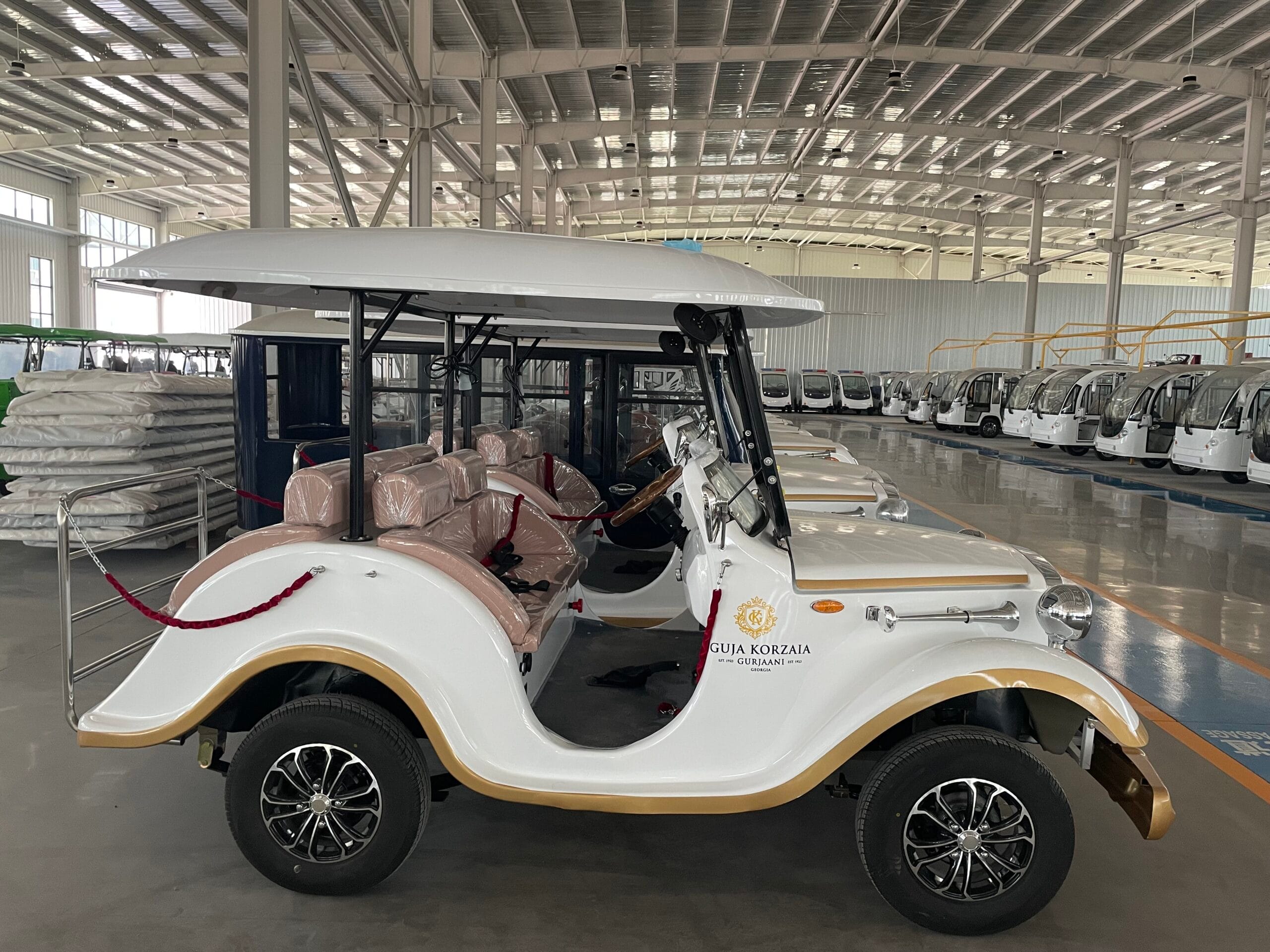
Electric Vehicles Golf Carts for Farms and Resorts are becoming an increasingly popular transportation solution for businesses that need convenient, efficient, and environmentally conscious mobility. From agricultural properties and livestock farms to luxury resorts, golf courses, holiday parks, and countryside hotels, electric golf carts offer a practical way to move people, equipment, and supplies across large areas. Their compact size, quiet operation, and low-speed maneuverability make them particularly useful in locations where traditional vehicles may be inconvenient or unnecessarily expensive to operate.
As businesses continue to focus on operating efficiency, guest satisfaction, and sustainable development, Electric Vehicles Golf Carts for Farms and Resorts provide a flexible alternative to conventional gasoline-powered transportation. They can help resort employees transport luggage, assist farm workers with daily tasks, carry maintenance equipment, and move visitors between different facilities without creating excessive noise or exhaust emissions at the point of use.
Modern electric golf carts are available in many configurations, including two-seat passenger models, four-seat family carts, six-seat resort shuttles, utility carts, and cargo models with rear storage platforms. Depending on the design, these vehicles can support a wide range of commercial applications. Businesses can choose a model based on passenger capacity, cargo requirements, terrain, battery performance, and expected daily operating hours.
For farm owners, Electric Vehicles Golf Carts for Farms and Resorts can simplify transportation between fields, barns, greenhouses, storage buildings, and staff facilities. For resort operators, they can improve guest transfers, housekeeping operations, property inspections, and equipment delivery. Their versatility makes them suitable for properties where short-distance transportation is a regular part of daily operations.
Choosing the right electric golf cart, however, requires more than comparing appearance and purchase prices. Buyers need to consider battery technology, charging arrangements, load capacity, safety features, road conditions, maintenance requirements, and the availability of replacement parts.
This guide explores how Electric Vehicles Golf Carts for Farms and Resorts can support agricultural businesses and hospitality properties, what features matter most when selecting a vehicle, and how companies can maximize long-term value through careful purchasing and fleet management.
Why Electric Vehicles Golf Carts for Farms and Resorts Are Growing in Popularity
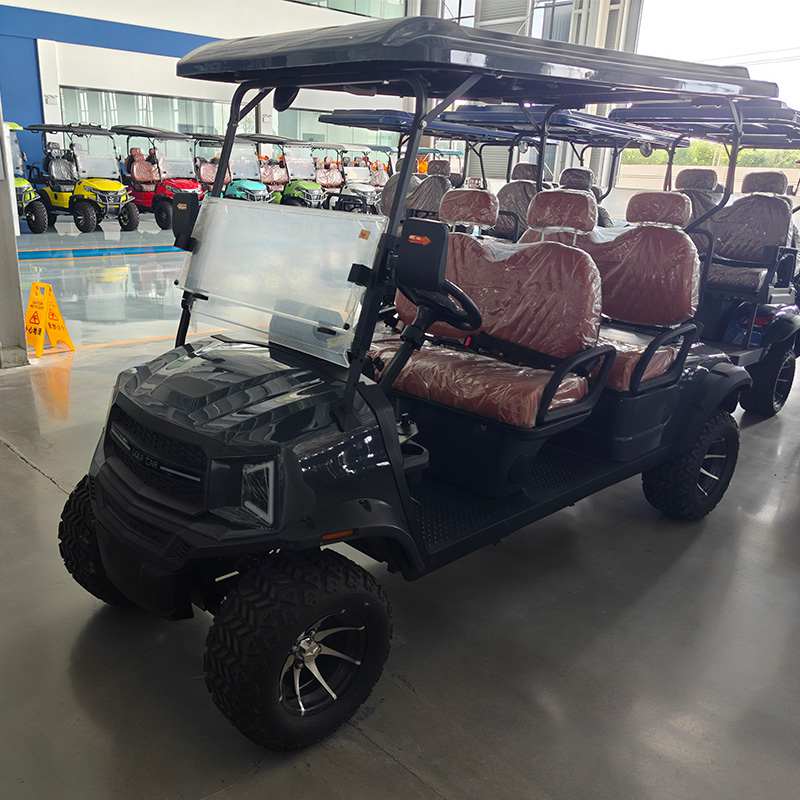
The demand for practical electric transportation is increasing across many commercial industries. Farms and resorts often cover extensive areas, but many daily journeys are relatively short. Driving a full-size vehicle for every inspection, supply delivery, or guest transfer may be inefficient when a smaller electric vehicle can complete the task.
Electric Vehicles Golf Carts for Farms and Resorts are designed to address these everyday transportation needs. Their small turning radius helps drivers navigate pathways, service areas, and designated internal roads. Electric motors also provide smooth acceleration, which can be useful when carrying passengers or transporting supplies over short distances.
Another advantage is the quieter operating experience. Noise can affect guest comfort in hospitality environments and may interfere with communication during agricultural work. Electric carts can reduce operating noise compared with many combustion-engine alternatives, although tire noise, warning signals, and other mechanical sounds remain present.
Electric vehicles also produce no tailpipe emissions during operation. This can be particularly valuable in enclosed or semi-enclosed working areas, provided the vehicle is used within the manufacturer’s intended environment and appropriate ventilation and safety requirements are followed.
The following table summarizes several reasons why businesses consider electric golf carts.
| Benefit | Application on Farms | Application in Resorts |
|---|---|---|
| Quiet operation | Supports routine inspections and supply transportation | Helps maintain a peaceful guest environment |
| Compact design | Navigates designated farm paths and service areas | Moves through resort pathways and facility zones |
| Lower routine energy costs | Supports frequent short-distance trips | Reduces energy costs for repeated guest transfers |
| Flexible configurations | Carries tools, feed, and light equipment | Transports luggage, guests, and housekeeping supplies |
| No tailpipe emissions | Suitable for appropriate outdoor work areas | Supports sustainability initiatives |
| Simplified daily operation | Helps workers travel between facilities | Improves internal transportation convenience |
Actual savings depend on electricity prices, vehicle utilization, battery replacement costs, maintenance practices, and the cost of the alternative transportation method.
For businesses with frequent short trips, Electric Vehicles Golf Carts for Farms and Resorts can provide a useful combination of accessibility, operational flexibility, and predictable daily transportation.
Understanding the Main Types of Electric Golf Carts
Not every property has the same transportation requirements. A small family farm may need only a compact two-seat vehicle, while a large agricultural operation may require a utility cart with a cargo bed. A luxury resort may prioritize passenger comfort, weather protection, and seating capacity.
Understanding the different configurations makes it easier to choose Electric Vehicles Golf Carts for Farms and Resorts that match real operational needs.
Two Seat Electric Golf Carts
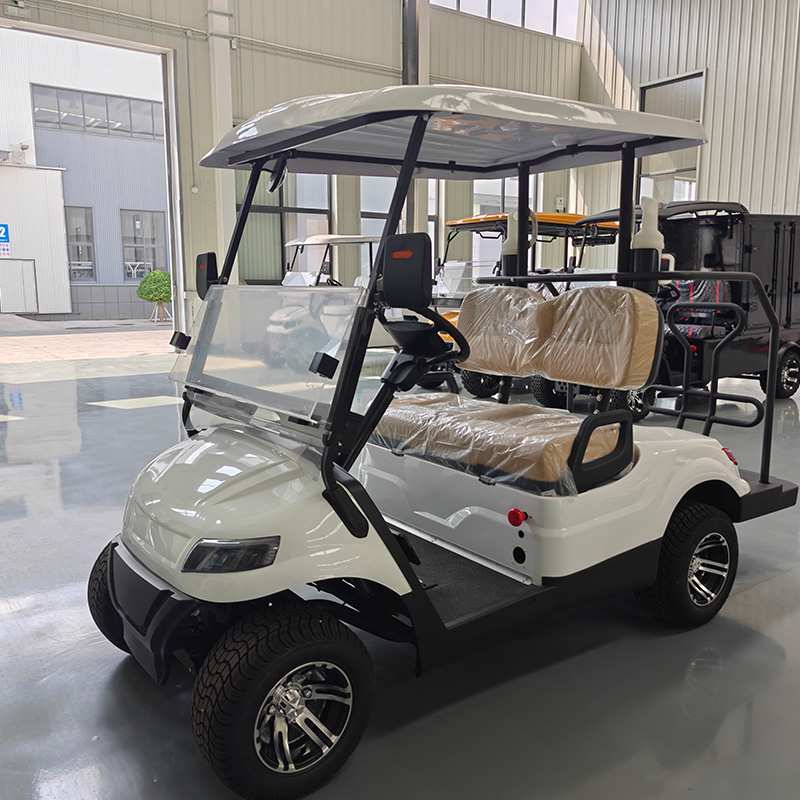
Two-seat electric golf carts are suitable for individual workers, property managers, maintenance staff, and small businesses. Their compact dimensions make them relatively easy to maneuver in designated narrow pathways and parking areas.
On farms, a two-seat cart can help an owner inspect irrigation equipment, check fences, visit greenhouses, or move between nearby buildings. At resorts, it can be used by maintenance technicians, security personnel, and managers conducting routine inspections.
These models are generally attractive to businesses that prioritize simplicity and maneuverability over passenger capacity. Buyers should still verify the vehicle’s overall dimensions, turning radius, rated payload, and suitability for the property’s terrain.
Four Seat Electric Golf Carts
Four-seat models offer greater flexibility for businesses that regularly transport small groups. They can carry resort guests, family members, farm supervisors, or employees traveling between nearby facilities.
For hospitality businesses, four-seat Electric Vehicles Golf Carts for Farms and Resorts can support guest transfers from parking areas to reception buildings, restaurants, recreational facilities, and accommodation zones. They can also provide convenient transportation for guided property tours.
For agricultural operations, four-seat vehicles may be useful when supervisors need to travel with colleagues or contractors. However, carrying passengers should never exceed the manufacturer’s rated seating capacity or payload limit.
Six Seat and Multi Passenger Electric Golf Carts
Large resorts, event venues, holiday parks, and golf communities may benefit from six-seat or other multi-passenger models.
These vehicles can reduce the number of individual trips required to move guests between designated locations. A larger cart may be especially useful during check-in periods, events, or scheduled transfers.
Before purchasing a high-capacity model, businesses should evaluate its turning radius, braking performance, total loaded weight, battery capacity, and accessibility. More seats can improve transportation efficiency, but the additional weight may affect range and performance.
Electric Utility Golf Carts
Utility golf carts are designed to transport equipment, supplies, and materials rather than focus exclusively on passenger comfort. Depending on the model, they may include a rear cargo bed, enclosed storage, tool compartments, or other practical accessories.
On farms, utility carts can support the movement of hand tools, small containers, maintenance materials, and light supplies. In resorts, they can help housekeeping teams transport linens, maintenance workers move equipment, and groundskeeping teams deliver supplies.
Businesses should confirm the maximum payload, cargo-bed dimensions, load distribution requirements, and whether the vehicle is suitable for the intended surface. A utility golf cart is not automatically suitable for heavy agricultural loads or towing.
Enclosed Electric Golf Carts
Enclosed electric golf carts may feature a cabin, doors, windows, a roof, and other weather-protection components. They can be attractive to resorts operating in areas with frequent rain, strong sunlight, or seasonal temperature changes.
On farms, an enclosed design may offer additional protection for workers traveling between buildings or conducting routine inspections. In resorts, it can improve guest comfort during certain weather conditions.
Buyers should examine ventilation, visibility, entry and exit arrangements, weather sealing, and the manufacturer’s operating-temperature guidance. Enclosed designs also need to be assessed for their effects on visibility, vehicle weight, and energy consumption.
How Electric Vehicles Golf Carts for Farms and Resorts Improve Farm Operations
Agricultural businesses frequently need to move workers and equipment between locations without using large vehicles for every journey. Electric Vehicles Golf Carts for Farms and Resorts can provide a convenient transportation option for suitable light-duty tasks.
The best applications depend on the property layout, surface conditions, load requirements, and the type of agricultural work being performed.
Moving Between Fields and Farm Buildings
Large farms often include multiple buildings, storage areas, greenhouses, animal facilities, and maintenance zones. Employees may need to travel between these locations many times each day.
An electric golf cart can help reduce the time spent walking between nearby facilities. Workers can use it to carry basic tools, inspection equipment, documents, and other lightweight supplies.
For example, a greenhouse operator may use a utility cart to move between growing areas, irrigation controls, and a storage building. A livestock farm supervisor may use a passenger cart to inspect designated areas and communicate with employees.
The vehicle should be selected according to the actual distance between locations. Businesses with long routes should evaluate battery capacity, charging access, and real-world loaded range rather than relying solely on advertised range figures.
Supporting Greenhouse Operations
Greenhouses often contain narrow access routes, workstations, irrigation equipment, and plant storage areas. A compact electric cart may be useful when transporting light supplies between designated service zones.
However, greenhouse use requires careful planning. The cart must fit within the available pathways, maintain sufficient turning clearance, and avoid damaging plants or equipment.
Operators should also consider floor loading limits, moisture exposure, ventilation, and the vehicle’s suitability for the greenhouse environment. Not every golf cart is designed for use on wet floors or in confined indoor spaces.
Transporting Tools and Light Agricultural Supplies
Utility configurations are particularly useful when workers regularly carry small tools and supplies. A rear cargo bed can reduce the need for repeated manual carrying and help organize equipment.
Possible applications include moving pruning tools, cleaning supplies, small irrigation components, seed containers, and maintenance materials. The exact items and quantities must remain within the vehicle’s rated load limits.
For heavier materials, rough terrain, or agricultural towing, businesses should consider purpose-built utility vehicles instead of assuming that a standard golf cart can safely perform the task.
Inspecting Fences, Irrigation Systems, and Property Boundaries
Routine farm inspections can involve traveling along designated internal roads to check fences, irrigation lines, storage areas, and equipment installations.
Electric Vehicles Golf Carts for Farms and Resorts can make these trips more convenient, especially where travel distances are moderate and surfaces are suitable for the vehicle.
A cart equipped with secure storage may allow an employee to carry a clipboard, communication device, basic hand tools, and inspection supplies. If a farm includes steep slopes, deep mud, loose gravel, or uneven tracks, buyers should confirm the vehicle’s terrain capability before use.
Improving Worker Transportation
Agricultural facilities may employ workers who move between packing areas, offices, greenhouses, and storage buildings throughout the day.
A suitable electric golf cart can provide short-distance transportation for authorized personnel and reduce unnecessary walking across large properties. For seasonal operations, it may also help supervisors move between work areas during busy periods.
Passenger transportation must follow local rules and the manufacturer’s seating specifications. Workers should use designated routes, wear seat belts where fitted, and avoid carrying unauthorized passengers on cargo platforms.
How Electric Vehicles Golf Carts for Farms and Resorts Enhance Guest Experiences
In hospitality businesses, transportation is part of the overall guest experience. Visitors may arrive with luggage, travel with children or older family members, or need assistance moving between accommodation, dining, recreation, and parking areas.
Electric Vehicles Golf Carts for Farms and Resorts can help hospitality operators provide convenient transportation while maintaining a quieter atmosphere.
Convenient Guest Transfers
Resorts may cover large areas, with guest rooms separated from reception buildings, restaurants, pools, activity centers, and parking facilities.
Passenger electric golf carts can provide scheduled or on-demand transfers along designated routes. A well-organized cart service may reduce the walking distance for guests and improve access to different facilities.
Operators should establish clear pickup points, passenger limits, and procedures for luggage handling. During peak periods, dispatch arrangements can help prevent unnecessary waiting and reduce vehicle congestion.
Supporting Luxury and Boutique Resorts
Luxury resorts often aim to provide a smooth, personalized guest experience. An attractive electric golf cart can complement the property’s overall appearance while offering practical transportation.
Vehicle appearance, upholstery, roof design, seating comfort, and available accessories may influence the guest experience. Businesses can select finishes that match their brand identity, provided the chosen configuration meets operational and safety requirements.
A resort may also consider weather protection, accessible entry arrangements, and additional seating options for family groups. Customization should focus on functionality and durability rather than appearance alone.
Transporting Luggage and Hospitality Supplies
Resort staff regularly move luggage, linens, cleaning products, food-service supplies, and maintenance equipment. Depending on the vehicle design, an electric utility cart may help streamline these tasks.
Separating passenger transportation from cargo transportation can be particularly effective. A passenger cart can focus on guest transfers, while a utility model handles housekeeping and maintenance deliveries.
This approach helps avoid overloading passenger vehicles and may reduce conflicts between guest services and internal logistics.
Supporting Eco Conscious Tourism
Many travelers pay attention to how businesses manage energy, waste, and environmental impact. Electric golf carts can support a resort’s sustainability efforts by reducing direct tailpipe emissions during operation.
Nevertheless, the overall environmental impact depends on electricity generation, battery production, battery lifespan, and end-of-life recycling. Resorts should describe their sustainability initiatives accurately rather than presenting electric vehicles as completely impact-free.
Electric Vehicles Golf Carts for Farms and Resorts can be part of a wider strategy that includes efficient lighting, responsible water use, renewable electricity, waste reduction, and sustainable landscaping.
Essential Features to Consider Before Buying
Selecting the right electric golf cart requires a clear understanding of how the vehicle will be used. A model designed for smooth golf-course paths may not be appropriate for a farm with uneven terrain, while a rugged utility cart may not offer the passenger comfort expected at a luxury resort.
The following comparison provides a starting point for evaluating different features.
| Feature | Why It Matters | What Buyers Should Check |
|---|---|---|
| Battery capacity | Influences operating time and available energy | Battery specifications and expected duty cycle |
| Driving range | Determines how far the cart can travel between charges | Real-world range under expected loads |
| Motor performance | Affects acceleration and climbing ability | Rated output and terrain suitability |
| Payload capacity | Determines how much weight can be carried | Total rated payload, including passengers |
| Seating configuration | Supports different passenger requirements | Approved seating capacity and restraints |
| Ground clearance | Helps determine suitability for uneven surfaces | Clearance, tire design, and chassis configuration |
| Braking system | Supports safe stopping | Brake design, inspection requirements, and load rating |
| Charging system | Affects daily fleet availability | Charger compatibility, charging time, and electrical supply |
| Weather protection | Influences comfort in different conditions | Roof, windshield, doors, and ventilation |
| Parts availability | Affects maintenance downtime | Local service support and replacement components |
Battery Capacity and Driving Range
Battery performance is one of the most important considerations when buying Electric Vehicles Golf Carts for Farms and Resorts.
A cart that operates for several hours under light loads may deliver a different range when carrying multiple passengers, climbing slopes, or transporting cargo. Temperature, tire pressure, driving style, and battery condition can also affect performance.
Buyers should estimate the total distance traveled each day and identify periods when charging is practical. It is generally better to choose a vehicle with a suitable operating margin than to depend on the maximum advertised range.
For a fleet, businesses should also determine whether vehicles can be charged overnight, during staff breaks, or between scheduled shifts.
Motor Power and Terrain Capability
Motor performance should match the property’s road conditions. Flat resort pathways may require different capabilities from agricultural routes that include inclines, gravel, and uneven surfaces.
When evaluating Electric Vehicles Golf Carts for Farms and Resorts, buyers should review the manufacturer’s stated climbing capability, maximum speed, rated load, and restrictions on terrain.
A cart that performs well on smooth ground may struggle when fully loaded on a steep or loose surface. If regular use involves difficult terrain, a purpose-built utility vehicle with appropriate tires, suspension, braking, and drivetrain features may be a better choice.
Payload and Cargo Capacity
Payload capacity includes more than the materials carried in a cargo bed. Depending on the manufacturer’s specifications, it may include occupants, accessories, luggage, and other items added to the vehicle.
Businesses should calculate the expected total weight under realistic conditions. This is particularly important for resorts transporting several guests and their luggage or farms carrying tools and supplies.
Overloading can reduce braking effectiveness, affect stability, increase component wear, and compromise safety. A vehicle should never be selected solely because its cargo bed appears large enough.
Comfort and Ergonomics
Comfort matters when employees or guests use the vehicle frequently. Seat cushioning, legroom, handholds, step height, visibility, and ease of entry can all affect usability.
For resort applications, comfort may also include roof coverage, wind protection, quiet operation, and easy luggage access. For farm operations, durable seating and practical storage may be more important than decorative features.
Businesses should evaluate these details before purchasing a large fleet, especially when the vehicles will be used for extended periods each day.
Comparing Battery Technologies for Commercial Golf Carts
Battery selection influences purchase price, charging practices, maintenance, and long-term operating costs. Lead-acid and lithium-ion batteries are common options, but the best choice depends on the vehicle configuration and the operating environment.
| Comparison Factor | Lead-Acid Battery | Lithium-Ion Battery |
|---|---|---|
| Initial purchase cost | Often lower | Often higher |
| Routine maintenance | Some types require water-level checks and terminal care | Typically lower routine battery maintenance |
| Weight | Generally heavier for comparable usable energy | Generally lighter |
| Charging behavior | Depends on battery type and charger | Depends on chemistry, battery management, and charger |
| Cycle life | Depends on depth of discharge and maintenance | Depends on chemistry, temperature, and charging practices |
| Replacement cost | Often lower per replacement battery | May be higher per battery pack |
| Fleet suitability | Can suit budget-conscious operations | Can suit intensive use when supported by the vehicle design |
These are general tendencies, not guarantees. Battery quality, system design, charging conditions, and usage patterns can substantially affect results.
When Lead-Acid Batteries Make Sense
Lead-acid batteries may suit businesses with a limited initial budget, predictable operating schedules, and sufficient time for charging and maintenance.
Traditional flooded lead-acid batteries require appropriate maintenance, including checking electrolyte levels where applicable. Sealed lead-acid types have different maintenance requirements, so buyers should follow the specific manufacturer’s instructions.
Businesses should also consider battery weight, charging ventilation requirements, and the consequences of leaving a battery in a discharged state.
When Lithium-Ion Batteries May Be Preferable
Lithium-ion batteries may offer advantages for operations that use carts frequently or need to reduce maintenance interruptions. Depending on the battery system, they may support faster charging, lower vehicle weight, and a longer service life.
However, battery chemistry matters. A lithium battery pack must be compatible with the vehicle’s motor controller, charger, battery management system, and electrical architecture.
Buyers should ask about the battery warranty, cycle-life test conditions, charging limits, temperature restrictions, and replacement availability. They should also confirm whether charging can be completed within the fleet’s actual working schedule.
Operating Costs and Long Term Value
The purchase price is only one part of the total cost of owning Electric Vehicles Golf Carts for Farms and Resorts. Businesses should evaluate energy consumption, routine servicing, tires, battery replacement, insurance, repairs, and vehicle downtime.
A lower-priced cart may appear attractive initially but could become more expensive if it requires frequent repairs or lacks readily available replacement parts. Conversely, a premium model may not provide enough additional value for a property with limited daily use.
A total cost of ownership calculation helps compare options over a realistic operating period.
Calculating Electricity Costs
Electricity costs can be estimated using the following formula:
Electricity cost per day = Daily electricity consumption in kWh × Electricity price per kWh
For example, if a cart consumes 5 kWh of electricity per day and electricity costs $0.20 per kWh, the daily energy cost would be $1.00.
This example is illustrative rather than a claim about the consumption of a particular model. Actual energy use should be measured or estimated from manufacturer data under representative operating conditions.
Comparing Electric and Gasoline Alternatives
The following table shows the categories businesses should compare when evaluating electric carts against gasoline-powered alternatives.
| Cost Category | Electric Golf Cart | Gasoline Powered Vehicle |
|---|---|---|
| Energy or fuel | Electricity consumption | Gasoline consumption |
| Routine maintenance | Depends on vehicle and battery system | Includes engine-related servicing |
| Battery or engine costs | Battery replacement may be significant | Engine and fuel-system repairs may be significant |
| Operating noise | Generally quieter | Generally louder |
| Tailpipe emissions | None during operation | Present during operation |
| Refueling or charging | Requires suitable charging access | Requires fuel access |
| Daily operating schedule | Depends on battery range and charging time | Depends on fuel capacity and refueling access |
A complete comparison should use actual purchase prices, energy or fuel consumption, maintenance estimates, expected annual mileage, and replacement schedules.
Evaluating Return on Investment
Businesses can estimate the return on investment by comparing expected savings and operational benefits with the total purchase and ownership costs.
For example, a resort that currently uses a gasoline vehicle for frequent short transfers may reduce fuel expenses by switching to an appropriate electric cart. If the electric model also requires less routine maintenance, the savings may accumulate over time.
However, the result depends on usage. A cart that operates only occasionally may not generate enough savings to justify a large price premium. A high-utilization fleet may have a stronger business case, particularly when vehicles can be charged conveniently.
Electric Vehicles Golf Carts for Farms and Resorts should therefore be evaluated according to the property’s real transportation needs rather than a general assumption that every electric vehicle will be cheaper.
Weather Protection and All Season Performance
Farms and resorts operate in different climates, and weather conditions can influence vehicle selection.
High temperatures may affect battery performance and charging requirements. Rain can create slippery surfaces, while standing water and muddy paths may exceed the capabilities of ordinary golf carts. Cold conditions can reduce battery performance and increase the energy needed for heating or other accessories.
Roofs, Windshields, and Enclosures
A roof can provide shade and help protect passengers from light rain. A windshield can improve comfort by reducing exposure to wind, dust, and insects. Full or partial enclosures may offer additional protection where the vehicle and local regulations permit their use.
For resorts, these accessories may improve guest comfort during transfers. On farms, they may help workers travel between designated work areas in variable weather.
Nevertheless, accessories add weight and may affect visibility, handling, and energy consumption. Buyers should verify compatibility with the specific cart and avoid modifications that interfere with required safety equipment.
Tires and Road Surfaces
Tire selection is important for Electric Vehicles Golf Carts for Farms and Resorts because surface conditions can vary considerably.
Smooth tires may be appropriate for designated paved pathways, while other tread patterns may provide better traction on suitable compacted surfaces. No tire makes a standard golf cart automatically suitable for deep mud, loose sand, or severe off-road conditions.
Farm operators should assess drainage, surface firmness, slope, and seasonal changes before selecting tires. Resort managers should also consider wet paving, pedestrian crossings, and areas shared by service vehicles.
Battery Care in Different Temperatures
Battery charging and storage should follow the manufacturer’s temperature limits. Excessive heat can accelerate battery degradation, while cold conditions can reduce available capacity.
Charging systems should be installed in an appropriate location with suitable electrical protection. Battery packs should never be charged with incompatible equipment, and damaged batteries should be handled according to the manufacturer’s safety procedures.
A well-planned charging area can help protect equipment and support consistent fleet availability throughout the year.
Safety Standards and Responsible Vehicle Operation
Safety should remain a priority when introducing Electric Vehicles Golf Carts for Farms and Resorts. Although these vehicles often travel at lower speeds than passenger cars, they can still cause injuries or property damage if operated incorrectly.
Businesses should develop operating procedures based on vehicle specifications, property conditions, and applicable local requirements.
Driver Training
Employees should receive training before using a commercial golf cart. Training should cover acceleration, braking, steering, turning, parking, charging, passenger handling, and cargo security.
Drivers should understand the vehicle’s maximum payload, seating capacity, and operating limitations. They should also know which routes are approved for cart use and which areas are restricted.
Where possible, farms and resorts should designate trained operators for passenger transport, especially when carrying guests, children, or visitors unfamiliar with the property.
Passenger and Cargo Safety
Passengers should use installed seat belts where fitted and follow the vehicle manufacturer’s instructions. Drivers should avoid sudden turns, abrupt braking, and unsafe speeds, particularly when carrying a full passenger load.
Cargo should be secured so that it cannot shift during movement. Heavy items should be placed and distributed according to the manufacturer’s loading guidance.
Passengers should never ride on cargo beds, steps, or other areas not designed for seating. Children should be transported only in configurations and under conditions permitted by applicable rules and the vehicle manufacturer.
Pedestrian Management
Resorts, farms with visitor attractions, and golf facilities may have pedestrians sharing designated routes with vehicles.
Operators should establish speed limits, clear signage, and pedestrian-priority zones. Drivers should slow down near reception areas, restaurants, animal enclosures, recreational facilities, and blind corners.
Good route planning can reduce conflicts between passenger carts, maintenance vehicles, delivery equipment, and people walking around the property.
Local Compliance
Electric golf carts are not automatically legal for use on public roads simply because they are electric or have headlights. Requirements can vary by jurisdiction and may include vehicle classification, registration, lighting, insurance, speed limits, safety equipment, and driver licensing.
Businesses should confirm local requirements before allowing a cart to travel beyond private property or designated routes. Where road use is required, a compliant low-speed vehicle or another approved vehicle type may be necessary.
Customization Options for Different Business Needs
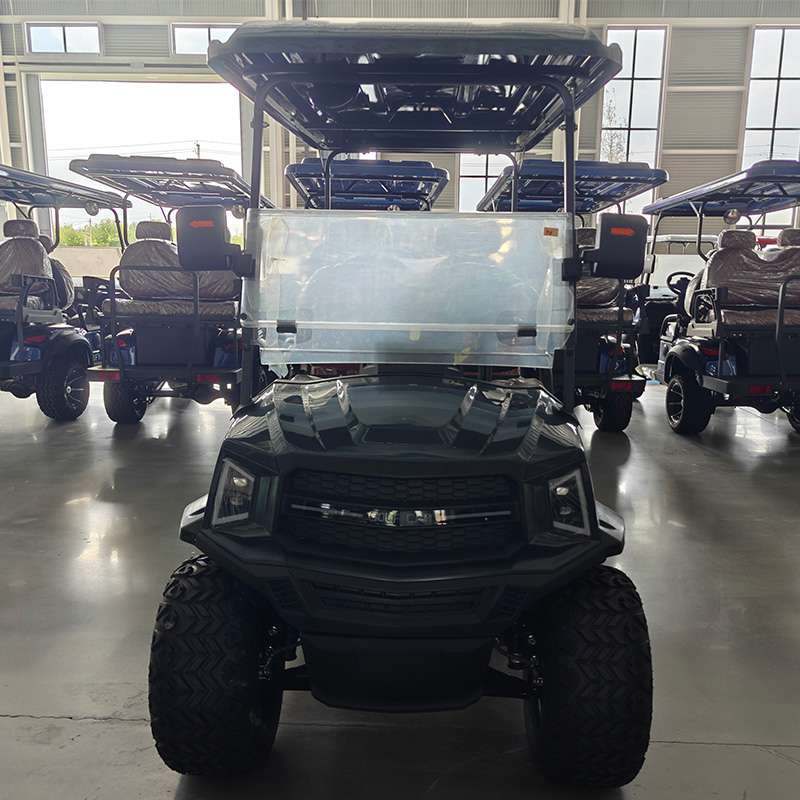
Customization can help businesses adapt Electric Vehicles Golf Carts for Farms and Resorts to specific tasks. The most useful upgrades improve functionality, comfort, storage, or fleet management without compromising safety.
Cargo Beds and Storage Accessories
Farm operators may prefer rear cargo beds, enclosed storage compartments, tool racks, and secure containers. These accessories can help organize frequently used supplies and reduce repeated trips to storage buildings.
Resorts may need luggage racks, housekeeping storage, maintenance tool compartments, or separate utility carts for deliveries.
Before installing accessories, buyers should confirm that their weight and dimensions are compatible with the cart’s rated capacity.
Weather and Comfort Accessories
Depending on the climate and intended use, businesses may consider roofs, windshields, side enclosures, weather curtains, and upgraded seating.
For resort guest transportation, comfortable seats and convenient entry arrangements may improve the overall experience. For farm work, durable materials and easy-to-clean surfaces may be more practical.
Accessories should be selected for their real operational value rather than added without considering weight, visibility, and maintenance requirements.
Lighting and Visibility
Lighting can support visibility during approved low-light operations. Depending on the model, businesses may consider headlights, rear lights, turn signals, reflective markings, mirrors, and warning devices.
The necessary equipment depends on the intended operating environment and applicable regulations. Additional lighting does not by itself make a cart legal for public-road use.
Branding and Fleet Identification
Resorts may customize body colors, logos, and fleet identification to match their brand. Farms may use different colors or markings to distinguish passenger vehicles, maintenance carts, and utility models.
Clear identification can help employees recognize the correct vehicle for each task. It can also simplify fleet management when a business operates multiple carts across different areas.
Choosing a Reliable Electric Golf Cart Supplier
Finding a suitable supplier is an important part of purchasing Electric Vehicles Golf Carts for Farms and Resorts. Vehicle quality, technical support, spare parts, and warranty terms can influence long-term operating performance.
Businesses should compare suppliers using documented specifications rather than relying exclusively on promotional descriptions.
Review Product Specifications
Ask for detailed information about the motor, battery, charger, dimensions, payload, seating capacity, braking system, maximum speed, and operating range.
For agricultural use, request clarification about the vehicle’s suitability for the property’s terrain. For resort operations, evaluate passenger comfort, luggage capacity, and the availability of weather protection.
Specifications should refer to the exact model and configuration being purchased. Similar-looking carts may have different electrical systems, load ratings, and component quality.
Evaluate Manufacturing and Quality Control
Businesses purchasing multiple vehicles should ask how the manufacturer manages production quality. Useful information may include component inspection, assembly checks, electrical testing, braking tests, and final vehicle inspection.
Where appropriate, request product documentation, applicable conformity information, and records demonstrating that the model meets relevant requirements in the destination market.
A supplier should be able to explain the limitations of the vehicle clearly rather than promising that one model can handle every application.
Check Warranty and Spare Parts Availability
A warranty is valuable only when its coverage, exclusions, and service procedures are clear.
Before purchasing, ask which components are covered, how long the coverage lasts, whether labor is included, and how warranty claims are handled. Battery warranties may have different terms from warranties covering the motor, controller, or chassis.
Businesses should also confirm the availability of replacement tires, chargers, brake components, electrical parts, and other frequently serviced items.
Request a Demonstration or Trial
If possible, test the cart under conditions similar to the intended operating environment. A demonstration can reveal details that are difficult to assess from a specification sheet, including turning behavior, passenger comfort, visibility, noise, and ease of loading.
For a farm, test the vehicle on approved representative surfaces and slopes. For a resort, evaluate passenger access, luggage handling, and maneuverability along designated routes.
A practical trial can help prevent costly purchasing mistakes, especially when ordering several vehicles.
Fleet Management Strategies for Farms and Resorts
When a business operates multiple Electric Vehicles Golf Carts for Farms and Resorts, fleet management becomes essential. Proper scheduling, maintenance, charging, and driver accountability can help maximize vehicle availability.
Establish a Daily Inspection Checklist
Before use, operators should check the vehicle for visible damage, tire condition, braking problems, steering issues, unusual noises, and warning indicators.
They should also verify that lights, mirrors, seat belts, and other required safety equipment are functioning correctly.
A cart with a safety-critical defect should be removed from service until the problem is assessed and corrected by an appropriately qualified person.
Organize Charging Schedules
Charging arrangements should reflect daily operating patterns. Resorts may need a group of carts available during morning check-in periods and evening guest transfers. Farms may require vehicles early in the morning for inspections and supply movement.
Managers can schedule charging during periods of low demand and maintain a suitable reserve of vehicles for unexpected tasks.
Charging stations should be located in approved areas with appropriate electrical protection, ventilation where required, and clear access for staff.
Track Maintenance and Usage
A fleet log can record vehicle identification, daily distance, charging activity, reported defects, repairs, and scheduled servicing.
This information can help managers identify vehicles with unusual energy consumption or repeated mechanical issues. It can also support better purchasing decisions when replacing older vehicles.
Where the fleet is large, businesses may use fleet-management software to coordinate maintenance, assign vehicles, and monitor utilization.
Match Vehicles to Specific Tasks
Not every employee needs the same vehicle. A passenger cart may be suitable for guest transfers, while a utility cart is better for moving maintenance supplies.
Assigning vehicles to clearly defined roles can reduce unnecessary loading changes, protect passenger areas, and improve scheduling.
This approach helps businesses obtain more value from Electric Vehicles Golf Carts for Farms and Resorts by using each vehicle according to its intended design.
Practical Purchasing Checklist for Commercial Buyers
Before placing an order, businesses should identify the essential requirements of their property. A structured checklist makes it easier to compare products and obtain consistent quotations from different suppliers.
| Purchasing Question | Why It Matters |
|---|---|
| How many passengers need transportation? | Determines the required seating configuration |
| What materials must be carried? | Determines payload and cargo-bed requirements |
| What is the daily travel distance? | Helps determine battery capacity and range |
| Are routes flat or uneven? | Influences motor, tire, and chassis requirements |
| Will the cart operate in rain or strong sun? | Helps determine weather-protection needs |
| Is charging available at the property? | Determines whether the operating schedule is practical |
| Are replacement parts locally available? | Helps reduce potential downtime |
| What warranty is offered? | Clarifies the manufacturer’s support obligations |
| Will the vehicle use public roads? | Determines whether additional legal requirements apply |
| What is the total ownership budget? | Helps compare long-term value rather than purchase price alone |
After completing the checklist, buyers should request written quotations that clearly state the model, configuration, included accessories, battery specifications, charger, delivery terms, warranty, and after-sales support.
For larger purchases, it may be helpful to order a sample vehicle before committing to a complete fleet. This allows the business to evaluate performance, staff feedback, charging needs, and suitability for the property’s layout.
Common Mistakes to Avoid When Buying Electric Golf Carts
Even a well-designed electric golf cart may disappoint if it does not match the intended application. Understanding common purchasing mistakes can help farms and resorts make more informed decisions.
Choosing Only by Purchase Price
A low initial price does not necessarily mean a lower total cost of ownership. Limited parts availability, unsuitable batteries, poor build quality, and inadequate service support can increase costs over time.
Buyers should compare the complete vehicle specification and expected operating costs before deciding.
Overlooking Real World Range
Advertised range may be measured under specific conditions that differ from actual operations. Full passenger loads, hills, frequent stops, accessories, and weather can affect energy consumption.
Businesses should use realistic estimates and retain an appropriate operating margin.
Ignoring Terrain Requirements
Standard golf carts are generally intended for suitable surfaces and specific operating conditions. They should not be assumed to perform safely in deep mud, severe slopes, or rough agricultural tracks.
Where terrain is challenging, a purpose-built utility vehicle may be a better option.
Underestimating Charging Infrastructure
Buying multiple carts without planning charging capacity can create operational bottlenecks. A business should evaluate available electrical supply, charging locations, cable management, and the number of vehicles requiring simultaneous charging.
Charging arrangements should be designed and installed according to applicable electrical requirements and manufacturer guidance.
Neglecting After Sales Support
A vehicle may become unavailable if a critical replacement component cannot be obtained promptly. Before purchasing, confirm service procedures, spare parts availability, warranty coverage, and technical assistance.
Reliable support is especially important for resorts where transportation interruptions can affect guest satisfaction and for farms where equipment availability influences daily workflows.
The Future of Electric Vehicles Golf Carts for Farms and Resorts
The development of electric transportation continues to create new opportunities for farms, resorts, and other commercial properties. Improvements in batteries, charging systems, vehicle controls, and fleet-management tools may make electric carts increasingly useful for a broader range of light-duty tasks.
Future developments may include more efficient battery systems, improved energy monitoring, integrated fleet scheduling, enhanced lighting, and better ergonomic designs. Some manufacturers may also offer telematics features that help businesses track vehicle location, usage, maintenance requirements, and charging status.
However, new features should be evaluated according to practical benefits. Digital monitoring may be useful for a large resort fleet, while a small farm may benefit more from simple controls, durable components, and readily available replacement parts.
Greater Emphasis on Energy Efficiency
Businesses are likely to continue evaluating how transportation fits into their wider energy strategies. Electric golf carts may be charged using electricity generated by conventional grids, renewable energy systems, or a combination of sources.
A resort with solar generation may be able to coordinate charging with periods of suitable electricity production, subject to the site’s electrical design and energy availability.
Farm operators may also explore energy-management strategies that coordinate vehicle charging with irrigation systems, lighting, refrigeration, and other electrical loads.
More Specialized Vehicle Configurations
Different applications require different designs. Manufacturers may continue expanding their offerings of passenger carts, utility vehicles, enclosed models, and specialized commercial configurations.
For buyers, this means that the best choice may not be the most powerful or expensive model. A vehicle designed for a specific task can offer better usability than a general-purpose cart with unnecessary features.
Long Term Sustainability Planning
Electric Vehicles Golf Carts for Farms and Resorts can support broader sustainability goals when they are selected and managed responsibly.
Long-term planning should include energy efficiency, battery care, responsible replacement, and appropriate battery recycling or disposal. Businesses should also evaluate vehicle lifespan and repairability when comparing products.
A durable cart that remains in service for many years may provide greater practical value than a cheaper vehicle that needs frequent replacement.
If you need electric tricycles or other services, please contact us!
Email: lyf18265443311@gmail.com
WhatsApp: +86 15853422441
WhatsApp: +86 18265443311
Phone:+86 15853422441
Facebook: https://www.facebook.com/people/NengFu-New-Energy-Vehicle/61577819953210/
Youtube: https://www.youtube.com/@Cargo-car/shorts
Conclusion
Electric Vehicles Golf Carts for Farms and Resorts offer a versatile transportation solution for businesses that need to move people, equipment, and supplies across designated internal routes. Their compact design, quiet operation, flexible configurations, and lack of tailpipe emissions make them attractive for agricultural properties, hospitality businesses, golf courses, and recreational facilities.
For farms, electric golf carts can support property inspections, greenhouse operations, transportation between buildings, and the movement of light supplies. For resorts, they can improve guest transfers, luggage handling, housekeeping logistics, and maintenance operations.
The key to selecting the right vehicle is understanding the property’s actual requirements. Passenger capacity, payload, terrain, battery performance, daily distance, charging access, safety features, and maintenance support should all be considered before purchasing.
Businesses should also compare the total cost of ownership rather than focusing exclusively on the initial price. Battery replacement, electricity consumption, servicing, parts availability, and expected vehicle lifespan can significantly influence long-term value.
When choosing Electric Vehicles Golf Carts for Farms and Resorts, buyers should work with suppliers who provide clear technical specifications, appropriate warranty coverage, reliable after-sales support, and vehicles suited to the intended operating conditions.
With careful planning, suitable vehicle selection, and consistent maintenance, electric golf carts can become a valuable part of daily transportation for farms and resorts. They can help businesses improve operational convenience, organize internal logistics, and support a more efficient approach to short-distance mobility.
FAQ
What Are Electric Vehicles Golf Carts for Farms and Resorts Used For?
Electric Vehicles Golf Carts for Farms and Resorts are used for short-distance transportation on suitable private or designated routes. Common applications include moving resort guests, transporting luggage, supporting housekeeping operations, inspecting farm facilities, carrying light tools, and moving supplies between buildings. The correct vehicle depends on passenger capacity, cargo requirements, terrain, and operating distance.
Are Electric Vehicles Golf Carts for Farms and Resorts Suitable for Daily Commercial Use?
Yes, appropriately specified electric golf carts can be suitable for daily commercial use. Businesses should choose a model designed for the expected workload, confirm its payload and operating range, and establish a regular maintenance schedule. Charging access and replacement-part availability are also important factors in maintaining reliable daily operations.
How Far Can Electric Vehicles Golf Carts for Farms and Resorts Travel on One Charge?
The distance varies by model, battery capacity, vehicle load, terrain, driving style, temperature, and battery condition. Buyers should review the manufacturer’s range specifications and request information about the conditions used for testing. For commercial operations, it is advisable to estimate daily travel requirements and allow a practical margin rather than relying on the maximum advertised range.
Are Electric Vehicles Golf Carts for Farms and Resorts More Cost Effective Than Gasoline Vehicles?
They can be more cost effective in suitable applications, particularly where vehicles make frequent short trips and electricity is reasonably priced. Electric carts may have lower energy costs and fewer engine-related maintenance requirements, but battery replacement and initial purchase costs must also be considered. A total cost of ownership comparison using actual operating data provides the most reliable assessment.
How Can Businesses Choose the Best Electric Vehicles Golf Carts for Farms and Resorts?
Businesses should begin by identifying their main tasks, passenger requirements, cargo loads, route conditions, daily distance, and charging arrangements. They should then compare battery specifications, motor performance, payload capacity, safety equipment, warranty coverage, spare parts availability, and supplier support. Testing a suitable model under representative conditions can help confirm that it meets the property’s operational needs.