Introduction
Urban delivery is becoming increasingly important as cities continue to grow and consumers expect faster, more convenient access to products and services. Businesses that deliver groceries, meals, parcels, flowers, documents, retail products, and other goods need transportation solutions that can operate efficiently in busy streets and neighborhoods. For many short-distance delivery applications, an Electric Tricycle for Cargo for Easy Urban Delivery can provide a practical alternative to larger delivery vehicles.
An Electric Tricycle for Cargo for Easy Urban Delivery combines an electric drive system with a three-wheel structure and a dedicated cargo area. This configuration can provide useful stability, storage capacity, and maneuverability for local transportation. Compared with some larger commercial vehicles, a cargo electric tricycle can be more compact, making it suitable for certain urban roads, residential communities, markets, commercial districts, and other locations where space is limited.
The growing interest in electric transportation is also encouraging businesses to examine alternatives to conventional fuel-powered delivery vehicles. Electric cargo tricycles can potentially reduce dependence on gasoline or diesel for short-distance transportation, while their compact design can support frequent stops and deliveries.
However, choosing the right Electric Tricycle for Cargo for Easy Urban Delivery requires more than looking at the motor or battery. Businesses should consider cargo capacity, vehicle dimensions, battery range, charging requirements, braking performance, storage design, road conditions, weather protection, maintenance, safety, and local regulations.
This article explains the major features and applications of an Electric Tricycle for Cargo for Easy Urban Delivery and discusses how businesses can evaluate this type of vehicle for their delivery operations.
What Is an Electric Tricycle for Cargo for Easy Urban Delivery?
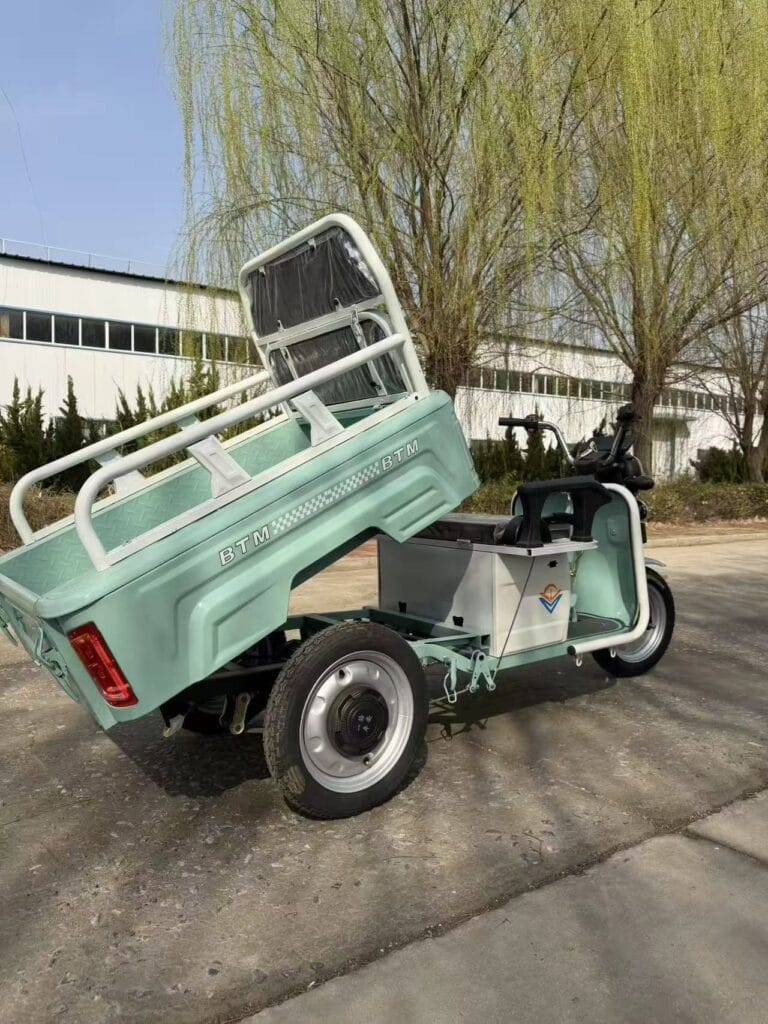
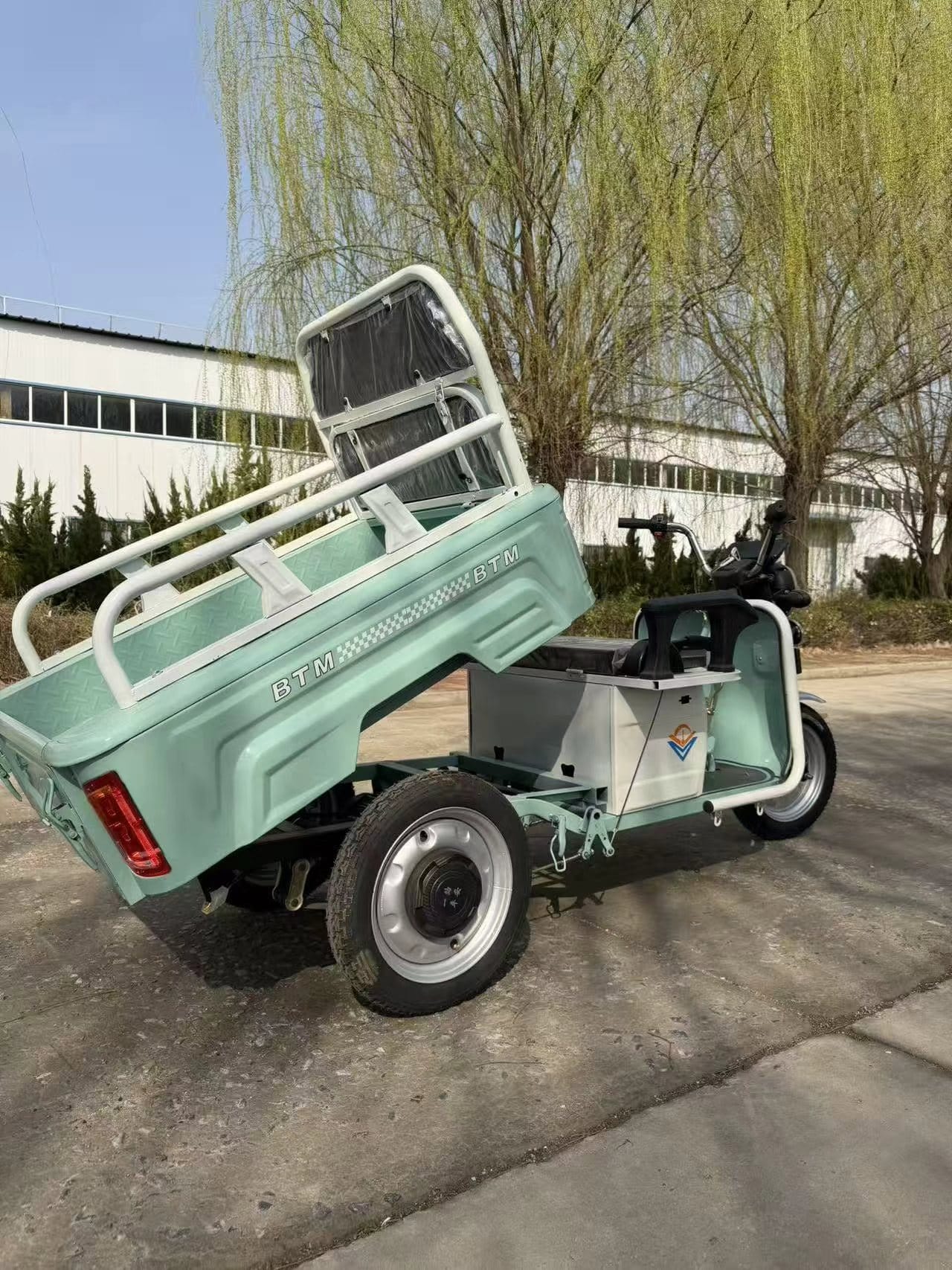
An Electric Tricycle for Cargo for Easy Urban Delivery is a three-wheeled electric vehicle designed specifically to transport goods over relatively short distances.
Unlike a passenger-focused electric tricycle, a cargo model generally provides a larger rear or front cargo area. Depending on the design, the cargo section can be an open platform, enclosed box, basket, container, or customized compartment.
The vehicle normally includes several major systems:
- Electric motor
- Rechargeable battery
- Motor controller
- Cargo compartment
- Three-wheel chassis
- Braking system
- Steering system
- Lighting system
- Tires and suspension
- Charging system
The exact specifications vary between manufacturers and models.
A basic cargo tricycle may be designed for lightweight deliveries, while a larger commercial model may be engineered for heavier loads. Some models may also include a cabin to protect the driver from rain and sunlight.
The central purpose of an Electric Tricycle for Cargo for Easy Urban Delivery is to provide a compact transportation solution for moving goods efficiently within urban areas.
Why Use an Electric Tricycle for Cargo for Easy Urban Delivery?
Urban transportation presents several challenges for businesses.
Delivery vehicles frequently need to stop, start, turn, load, unload, and navigate through areas with limited parking space. A large commercial vehicle may not always be convenient for these situations.
An Electric Tricycle for Cargo for Easy Urban Delivery can provide a smaller transportation platform that is suitable for many short-distance applications.
Some potential advantages include:
- Compact vehicle dimensions
- Electric propulsion
- Dedicated cargo space
- Three-wheel stability
- Convenient loading and unloading
- Potentially lower energy costs
- Easy maneuverability in suitable areas
- Flexible customization
- Suitability for frequent delivery stops
For businesses that operate primarily within a defined local area, these characteristics can make an electric cargo tricycle worth considering.
The actual advantages depend on the vehicle specifications, local road conditions, delivery requirements, and applicable regulations.
How an Electric Cargo Tricycle Supports Urban Logistics
Urban logistics involves much more than simply moving a product from one location to another.
A typical delivery may involve:
- Picking up products
- Loading the cargo
- Traveling to the destination
- Finding a suitable stopping location
- Unloading the goods
- Completing the delivery
- Returning for another shipment
An Electric Tricycle for Cargo for Easy Urban Delivery can be useful in operations involving multiple short trips.
Because the vehicle is designed around cargo transportation, businesses can organize their goods in a dedicated compartment instead of carrying them on a passenger seat or unsecured platform.
Cargo organization can also reduce unnecessary loading and unloading time.
Cargo Capacity and Load Requirements
Cargo capacity is one of the most important factors when choosing an electric cargo tricycle.
Businesses should determine the average weight and volume of their deliveries before selecting a vehicle.
For example, a restaurant delivering prepared meals may require a relatively small insulated cargo box, while a grocery business may need a larger compartment.
A parcel delivery company may prioritize volume and compartment organization, while a hardware supplier may prioritize load capacity.
Example Cargo Applications
| Business Type | Typical Cargo Requirement |
|---|---|
| Food delivery | Insulated food compartment |
| Grocery delivery | Medium cargo box |
| Parcel delivery | Organized storage space |
| Flower delivery | Protected cargo area |
| Retail delivery | Flexible storage |
| Laundry service | Large lightweight cargo |
| Local market vendor | Open or enclosed cargo area |
| Pharmacy delivery | Secure organized storage |
Businesses should never exceed the manufacturer’s rated load capacity.
The maximum payload should include the weight of the cargo and any other load included in the manufacturer’s specifications.
Cargo Box Design
The cargo box is one of the defining features of an Electric Tricycle for Cargo for Easy Urban Delivery.
Cargo boxes can come in many configurations.
Open Cargo Platform
An open platform provides easy loading and unloading.
It can be useful for:
- Boxes
- Equipment
- Produce
- Large packages
- Building materials
However, an open platform provides limited protection from weather.
Enclosed Cargo Box
An enclosed box can protect products from rain, dust, and direct sunlight.
It is particularly useful for:
- Food
- Parcels
- Electronics
- Retail products
- Documents
- Clothing
Insulated Cargo Box
An insulated cargo compartment can be useful for temperature-sensitive products, although insulation alone does not necessarily provide active refrigeration.
Businesses transporting temperature-sensitive goods should select equipment specifically designed for their requirements.
Electric Motor Performance
The electric motor determines how the vehicle converts battery power into movement.
Motor specifications should be evaluated according to the intended application.
A business operating mainly on flat urban roads with moderate cargo may have different requirements from a business operating on steep roads with heavier loads.
Important considerations include:
- Motor power
- Torque
- Acceleration
- Maximum permitted speed
- Load capacity
- Hill-climbing ability
- Energy efficiency
An Electric Tricycle for Cargo for Easy Urban Delivery should be selected based on the actual delivery environment rather than maximum specifications alone.
A higher-powered motor can increase performance but may also affect energy consumption, cost, and vehicle configuration.
Battery Capacity and Delivery Range
Battery capacity is another critical consideration.
The battery determines how much electrical energy is available for the motor and therefore influences the practical operating range.
However, battery capacity does not directly guarantee a specific delivery distance.
Actual range can be affected by:
- Cargo weight
- Driver weight
- Road conditions
- Hills
- Speed
- Wind
- Tire pressure
- Battery age
- Temperature
- Stop-and-go operation
Range Factors
| Factor | Potential Impact |
|---|---|
| Heavy cargo | Can increase energy consumption |
| High speed | Can use more energy |
| Hills | Require additional motor power |
| Frequent stops | Can affect energy use |
| Strong wind | Increases resistance |
| Low tire pressure | Increases rolling resistance |
| Battery aging | Can reduce usable capacity |
| Cold conditions | May affect battery performance |
Businesses should calculate expected daily mileage and compare it with the manufacturer’s stated specifications.
Charging Requirements
An Electric Tricycle for Cargo for Easy Urban Delivery needs a practical charging plan.
A delivery business may operate for several hours every day, making charging availability important.
Businesses should consider:
- Battery capacity
- Charging time
- Charger type
- Charging location
- Daily mileage
- Number of vehicles
- Delivery schedule
- Backup vehicle requirements
A business with a predictable schedule may charge vehicles overnight.
A business operating multiple shifts may need additional charging infrastructure or spare batteries where supported by the vehicle design.
Charging should always follow the battery and charger manufacturer’s instructions.
Urban Delivery Efficiency
Urban delivery often involves short distances and frequent stops.
An Electric Tricycle for Cargo for Easy Urban Delivery can be suitable for this type of operation because the vehicle is designed around compact local transportation.
For example, a grocery store may deliver several orders within a nearby neighborhood. A restaurant may complete multiple deliveries within a small service radius. A local retailer may transport products between a warehouse and several nearby stores.
The vehicle’s effectiveness depends on route planning.
A business can improve efficiency by organizing deliveries based on:
- Geographic location
- Delivery priority
- Customer availability
- Cargo type
- Vehicle capacity
- Traffic patterns
- Loading sequence
Last-Mile Delivery Applications
Last-mile delivery is one of the most important potential applications for electric cargo tricycles.
Last-mile delivery refers to the final transportation stage between a local distribution point and the customer.
This stage can be challenging because deliveries often occur in dense neighborhoods with frequent stops.
An Electric Tricycle for Cargo for Easy Urban Delivery can be used for certain last-mile applications where local regulations and infrastructure permit.
Potential applications include:
- E-commerce parcels
- Food delivery
- Grocery orders
- Pharmacy products
- Retail packages
- Documents
- Flowers
- Small business orders
The appropriate cargo configuration depends on the product being transported.
Food Delivery
Food delivery requires special attention to cargo organization and hygiene.
An electric cargo tricycle can be equipped with an appropriate food delivery compartment.
Potential features include:
- Insulated storage
- Multiple compartments
- Easy-clean surfaces
- Secure doors
- Adjustable shelving
- Branding panels
Food businesses should ensure that their delivery equipment meets applicable food-handling requirements.
The cargo area should also be designed to minimize product movement during transportation.
Grocery Delivery
Grocery delivery often involves a combination of small and medium-sized products.
An Electric Tricycle for Cargo for Easy Urban Delivery can support grocery delivery when the cargo area is large enough for the expected order volume.
A well-organized cargo compartment can include separate areas for:
- Dry goods
- Produce
- Packaged products
- Fragile items
If the business transports temperature-sensitive food, it should use appropriate temperature-control equipment rather than relying solely on the vehicle’s standard cargo box.
Parcel Delivery
Parcel delivery is another strong application for cargo electric tricycles.
Urban parcel deliveries often involve many stops within a relatively small geographic area.
An electric cargo tricycle can carry multiple packages while providing a compact platform for navigating suitable urban routes.
A cargo box can also be divided into sections to help drivers organize packages according to delivery sequence.
This can reduce the time spent searching for individual packages.
Flower Delivery
Flowers require careful handling because they can be sensitive to crushing, heat, and movement.
A cargo tricycle can be configured with a suitable compartment that provides enough space for floral arrangements.
The design should allow flowers to remain upright and protected.
Businesses may also add branding to the cargo box to turn the vehicle into a mobile advertising platform.
Small Business Applications
Small businesses may not need a full-size delivery truck.
An Electric Tricycle for Cargo for Easy Urban Delivery can provide a smaller-scale transportation option for certain businesses.
Potential users include:
- Bakeries
- Cafes
- Florists
- Grocery stores
- Laundry businesses
- Local retailers
- Hardware shops
- Repair services
- Market vendors
The vehicle can be configured around the business’s specific delivery needs.
Advantages for Frequent Short Trips
Frequent short trips can be demanding for conventional delivery vehicles because each trip may involve fuel consumption, parking, and repeated starting and stopping.
An electric cargo tricycle may be useful in this environment.
The electric drive system can provide direct electric propulsion, while the compact chassis can make it easier to operate in suitable urban spaces.
However, businesses should evaluate local regulations before using these vehicles on public roads, bicycle routes, pedestrian-access areas, or restricted streets.
Vehicle Dimensions and Maneuverability
Vehicle dimensions matter significantly in urban delivery.
A compact vehicle can be easier to maneuver and park than a larger delivery vehicle.
Businesses should measure:
- Vehicle width
- Vehicle length
- Turning radius
- Cargo height
- Overall height
- Ground clearance
An Electric Tricycle for Cargo for Easy Urban Delivery should be compatible with the routes it will use.
For example, narrow alleys or small loading areas may require a particularly compact design.
Three-Wheel Stability
The three-wheel structure provides a different riding experience from a two-wheel bicycle.
A cargo tricycle can offer a wider support base and allow the cargo area to be integrated into the chassis.
However, riders should understand how the vehicle behaves during turns.
Important considerations include:
- Turning speed
- Cargo distribution
- Center of gravity
- Road slope
- Braking
- Tire condition
Cargo should be distributed according to the manufacturer’s instructions.
Heavy goods should not be placed in a way that creates excessive imbalance.
Braking Performance
Cargo vehicles can become significantly heavier when fully loaded.
Braking performance is therefore especially important.
An Electric Tricycle for Cargo for Easy Urban Delivery should have a braking system appropriate for its maximum rated load and operating conditions.
Potential braking systems include:
- Drum brakes
- Disc brakes
- Hydraulic brakes
- Mechanical brakes
- Electronic braking assistance
The exact configuration varies by model.
Businesses should establish regular brake inspections as part of their maintenance program.
Suspension and Ride Comfort
Suspension can improve ride comfort, especially when cargo is transported over uneven roads.
The effectiveness of suspension depends on:
- Vehicle weight
- Cargo weight
- Road surface
- Tire type
- Suspension design
A delivery vehicle that frequently travels over uneven pavement may benefit from a suspension system designed for its operating environment.
However, suspension settings should also be compatible with the expected load.
Tires for Cargo Transportation
Tires influence traction, braking, comfort, and energy efficiency.
Cargo tricycles should use tires appropriate for their load and intended road surfaces.
Businesses should regularly check:
- Tire pressure
- Tread condition
- Sidewall damage
- Uneven wear
- Tire age
Incorrect tire pressure can affect handling and energy consumption.
Weather Protection for Delivery Drivers
Some cargo electric tricycles have open driver areas, while others can include a cabin.
A cabin can provide additional protection from:
- Rain
- Wind
- Sunlight
- Cold temperatures
An Electric Tricycle for Cargo for Easy Urban Delivery with a cabin may be particularly useful in areas with frequent rain.
However, the cabin can add weight and cost.
Businesses should determine whether weather protection is necessary for their operating environment.
Cargo Security
Cargo security is important when transporting valuable products.
An enclosed cargo box can help keep products protected and may provide a place for locking mechanisms.
Security features can include:
- Lockable doors
- Reinforced panels
- Internal compartments
- Secure shelving
- Anti-theft hardware
The appropriate security level depends on the value and type of cargo.
Branding Opportunities
The cargo box can provide a large visible surface for business branding.
Companies can use the vehicle to display:
- Company logo
- Brand colors
- Website
- Phone number
- Product information
- Promotional graphics
This can turn an Electric Tricycle for Cargo for Easy Urban Delivery into a mobile marketing platform.
Because delivery vehicles travel through neighborhoods and commercial areas, branding can increase local visibility.
Maintenance Requirements
Regular maintenance is essential for commercial vehicles.
A delivery business may use its electric tricycle every day, so small maintenance issues can quickly affect operations.
Routine checks can include:
- Tire pressure
- Brake condition
- Battery condition
- Lighting
- Wiring
- Motor operation
- Cargo box fasteners
- Suspension
- Steering
- Charger condition
Basic Maintenance Checklist
| Component | Maintenance Focus |
|---|---|
| Battery | Charging and storage |
| Motor | Performance and unusual noise |
| Tires | Pressure and wear |
| Brakes | Pads, shoes, cables, or hydraulic components |
| Steering | Smooth operation |
| Lights | Function |
| Cargo box | Structural condition |
| Wiring | Visible damage |
| Charger | Cable and connector condition |
The manufacturer’s maintenance schedule should always take priority.
Battery Maintenance
The battery is one of the most important components of an electric cargo tricycle.
Businesses should follow the battery manufacturer’s instructions regarding charging, storage, temperature, and inspection.
Poor battery management can affect performance and service life.
A fleet operator should also maintain records of:
- Charging cycles where applicable
- Battery condition
- Performance changes
- Maintenance
- Replacement dates
This can help businesses plan future battery expenses.
Operating Cost Considerations
One reason businesses investigate electric cargo transportation is the potential for reduced energy costs compared with fuel-powered vehicles.
However, the actual operating cost depends on many factors.
A business should consider:
- Electricity price
- Daily mileage
- Vehicle efficiency
- Battery life
- Maintenance
- Tires
- Repairs
- Insurance
- Registration
- Parking
- Driver costs
Example Cost Categories
| Cost Category | Consideration |
|---|---|
| Purchase | Initial vehicle investment |
| Electricity | Charging expense |
| Battery | Long-term replacement |
| Tires | Wear from daily operation |
| Brakes | Periodic replacement |
| Maintenance | Routine servicing |
| Repairs | Unexpected expenses |
| Insurance | Depends on local requirements |
| Registration | Depends on jurisdiction |
A complete cost-of-ownership calculation is more useful than comparing purchase prices alone.
Electric Cargo Tricycle vs Fuel-Powered Delivery Vehicle
Electric cargo tricycles and conventional fuel-powered vehicles serve different purposes.
| Feature | Electric Cargo Tricycle | Fuel-Powered Delivery Vehicle |
|---|---|---|
| Energy source | Electricity | Fuel |
| Vehicle size | Often compact | Often larger |
| Short urban trips | Potentially suitable | Suitable |
| Cargo capacity | Varies | Usually broader range |
| Local maneuverability | Often strong | Depends on vehicle |
| Charging/refueling | Charging required | Fueling required |
| Emissions during operation | No tailpipe emissions | Tailpipe emissions |
| Infrastructure | Charging access | Fuel access |
This comparison does not mean one type is suitable for every delivery operation.
Businesses should choose based on cargo requirements, distance, regulations, infrastructure, and operating environment.
Choosing the Right Cargo Configuration
The right cargo configuration depends on what the business transports.
A restaurant may need insulated storage.
A parcel company may need shelving.
A florist may need a tall compartment.
A grocery store may need flexible storage.
A construction service may need an open platform.
Cargo Configuration Examples
| Business | Recommended Consideration |
|---|---|
| Restaurant | Insulated box |
| Parcel service | Multi-compartment box |
| Florist | Upright protected storage |
| Grocery | Flexible enclosed compartment |
| Hardware | Open platform or reinforced box |
| Laundry | Large lightweight compartment |
| Retail store | General-purpose cargo box |
Customization can make the vehicle more useful for specific delivery operations.
Customization Options
Manufacturers may provide different customization possibilities.
These can include:
- Cargo box size
- Cargo box material
- Insulation
- Shelving
- Doors
- Locking mechanisms
- Branding
- Cabin
- Seating
- Lighting
- Mirrors
- Safety equipment
Businesses should distinguish between factory-standard options and custom engineering.
Custom designs may require additional development time and production costs.
Local Regulations
Before purchasing an Electric Tricycle for Cargo for Easy Urban Delivery, businesses should investigate applicable local regulations.
Requirements may cover:
- Vehicle classification
- Maximum speed
- Vehicle dimensions
- Weight
- Lighting
- Braking
- Registration
- Insurance
- Driver requirements
- Road access
- Cargo limits
Regulations vary significantly between jurisdictions.
A vehicle that is legal for a particular road or category in one location may have different requirements elsewhere.
Businesses should confirm local requirements with the relevant transportation authorities before beginning commercial operations.
Planning Delivery Routes
Route planning can improve the productivity of an electric cargo tricycle.
Businesses can organize routes by grouping deliveries in the same geographic area.
A simple route planning process can involve:
- List all delivery addresses.
- Group nearby locations.
- Estimate cargo weight.
- Determine the delivery sequence.
- Consider traffic and road restrictions.
- Confirm available charging opportunities.
- Complete the route within the vehicle’s practical operating range.
For larger delivery operations, route optimization software can further improve planning.
Fleet Management
Businesses operating several electric cargo tricycles should consider fleet management.
Useful fleet information can include:
- Vehicle identification
- Mileage
- Battery condition
- Maintenance dates
- Tire replacement
- Brake service
- Driver assignment
- Delivery routes
- Charging schedules
Maintaining records can help identify recurring maintenance problems and improve vehicle availability.
Electric Tricycle for Cargo for Easy Urban Delivery and Sustainability
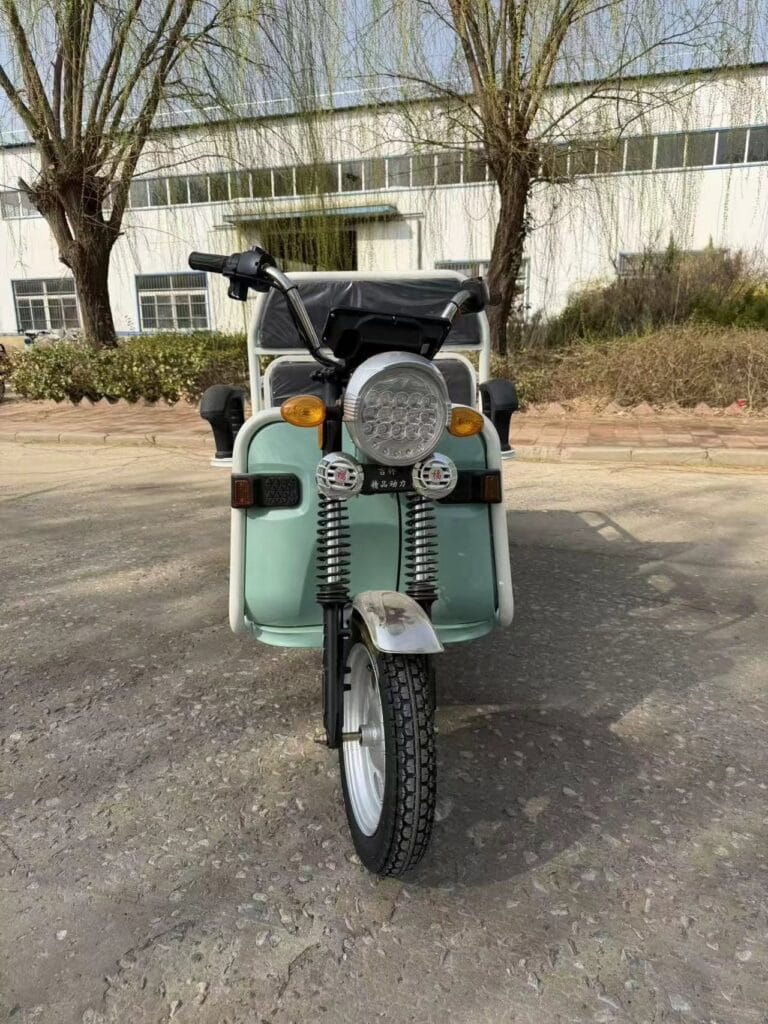
Electric transportation is increasingly being considered as part of broader efforts to reduce reliance on fossil fuels.
An Electric Tricycle for Cargo for Easy Urban Delivery produces no tailpipe emissions during operation.
However, overall environmental impact depends on factors such as electricity generation, battery manufacturing, vehicle lifetime, maintenance, and end-of-life recycling.
Businesses interested in sustainability should consider the complete lifecycle of their vehicles rather than focusing on one factor.
Using Electric Cargo Tricycles in Commercial Districts
Commercial districts often have many short delivery routes.
Restaurants, shops, offices, and service businesses may need products transported between nearby locations.
A compact electric cargo tricycle can potentially serve these routes while occupying less road and parking space than a larger delivery vehicle.
Businesses should still follow local traffic and parking regulations.
Using Electric Cargo Tricycles in Residential Areas
Residential delivery is another common application.
Groceries, parcels, meals, flowers, and household products can require frequent deliveries to homes.
A cargo tricycle can be configured for easy access to individual packages.
An organized cargo box can help drivers quickly identify the correct order at each stop.
Choosing a Manufacturer
Selecting the right manufacturer is important for long-term commercial use.
Businesses should evaluate:
- Manufacturing experience
- Vehicle quality
- Motor specifications
- Battery options
- Cargo capacity
- Safety features
- Customization
- Spare parts
- Warranty
- Technical support
- Production capacity
Requesting detailed specifications and samples can help businesses compare manufacturers.
For fleet purchases, it may also be useful to evaluate after-sales service and spare-parts availability before placing an order.
Questions to Ask a Supplier
Before purchasing an Electric Tricycle for Cargo for Easy Urban Delivery, businesses can ask the supplier:
- What is the rated payload?
- What is the battery capacity?
- What is the estimated range?
- How long does charging take?
- What motor configuration is available?
- What type of brakes are installed?
- What are the vehicle dimensions?
- Is the cargo box customizable?
- Are spare parts available?
- What warranty is provided?
- What maintenance is required?
- What delivery lead time applies?
- Can the vehicle be customized with branding?
- What testing documentation is available?
- Which local regulations should the buyer verify?
Clear answers can help businesses avoid misunderstandings.
How to Start an Electric Cargo Delivery Project
A business considering an Electric Tricycle for Cargo for Easy Urban Delivery can begin with a simple evaluation process.
Analyze Current Deliveries
Record daily distance, cargo weight, number of deliveries, and route characteristics.
Determine Vehicle Requirements
Decide on cargo capacity, battery range, motor performance, cabin requirements, and storage.
Compare Manufacturers
Review specifications, production capabilities, quality procedures, and after-sales support.
Request Samples or Demonstrations
If possible, inspect or test the vehicle before committing to a larger order.
Step 5: Evaluate Total Cost
Include purchase, charging, maintenance, battery replacement, insurance, registration, and other costs.
Confirm Regulations
Check whether the vehicle can legally operate on the intended routes.
Establish Maintenance Procedures
Create regular inspection and servicing schedules.
Train Drivers
Drivers should understand vehicle controls, cargo loading, braking, turning, charging, and safety procedures.
If you need electric tricycles or other services, please contact us!
Email: lyf18265443311@gmail.com
WhatsApp: +86 15853422441
WhatsApp: +86 18265443311
Phone:+86 15853422441
Facebook: https://www.facebook.com/people/NengFu-New-Energy-Vehicle/61577819953210/
Youtube: https://www.youtube.com/@Cargo-car/shorts
Conclusion
An Electric Tricycle for Cargo for Easy Urban Delivery can provide a practical transportation option for businesses that need to move goods across relatively short urban routes.
Its three-wheel configuration can provide a useful platform for cargo transportation, while electric propulsion can offer an alternative to conventional fuel-powered delivery vehicles. The dedicated cargo area can also be customized for different applications, including food delivery, grocery transportation, parcel services, flower delivery, laundry services, retail distribution, and local commercial operations.
The effectiveness of an Electric Tricycle for Cargo for Easy Urban Delivery depends on selecting the right specifications. Businesses should consider cargo weight, cargo volume, battery capacity, motor performance, range, braking, tires, vehicle dimensions, storage, weather protection, charging infrastructure, and local regulations.
A successful delivery program also requires more than purchasing the vehicle. Route planning, proper cargo loading, regular maintenance, battery management, driver training, and fleet management can all contribute to reliable operation.
For businesses operating mainly within local areas, a compact electric cargo tricycle can potentially provide a flexible solution for frequent deliveries. Its suitability should always be evaluated according to the specific operating environment and legal requirements.
With appropriate planning and the right configuration, an Electric Tricycle for Cargo for Easy Urban Delivery can become a useful part of modern urban logistics, helping businesses transport goods efficiently while adapting to changing mobility needs.
FAQ
What is an Electric Tricycle for Cargo for Easy Urban Delivery?
An Electric Tricycle for Cargo for Easy Urban Delivery is a three-wheeled electric vehicle designed to transport goods in urban and local environments. It typically includes a dedicated cargo platform, box, basket, or compartment and is intended for short-distance commercial transportation.
How much cargo can an electric cargo tricycle carry?
The maximum payload varies by model and manufacturer. Businesses should check the vehicle’s official rated payload before loading goods. The total load should never exceed the manufacturer’s specified capacity.
How far can an Electric Tricycle for Cargo travel on one charge?
The practical range depends on battery capacity, cargo weight, speed, road conditions, hills, wind, tire pressure, temperature, battery condition, and driving behavior. Manufacturer range figures are generally estimates based on particular test conditions.
What businesses can use an Electric Tricycle for Cargo?
Electric cargo tricycles can be used for various local delivery applications, including food delivery, grocery transportation, parcel delivery, flower delivery, laundry services, retail distribution, market vending, and other short-distance commercial transportation where permitted.
What should I consider before buying an Electric Tricycle for Cargo for Easy Urban Delivery?
Important factors include rated payload, cargo dimensions, battery capacity, estimated range, motor performance, charging time, braking system, vehicle size, tire specifications, weather protection, maintenance requirements, spare parts, warranty, customization options, total operating costs, and applicable local regulations.