Introduction
Modern transportation is changing rapidly as businesses look for faster, more affordable, and more environmentally friendly ways to move goods. From local deliveries and agricultural transportation to warehouse logistics and urban distribution, companies need vehicles that can handle daily workloads without creating unnecessary operating costs. This is where the cargo electric tricycle has become an increasingly practical solution.
A cargo electric tricycle combines the flexibility of a three-wheel vehicle with the efficiency of an electric power system and the practical carrying capability required for commercial transportation. Compared with conventional fuel-powered delivery vehicles, a cargo electric tricycle can provide lower energy consumption, easier operation, and excellent maneuverability in narrow streets, residential areas, markets, farms, industrial parks, and other locations.
The growing demand for efficient last-mile transportation has also increased interest in the cargo electric tricycle among distributors, logistics companies, retailers, agricultural businesses, construction businesses, and other commercial users. A well-designed cargo electric tricycle can transport products, tools, equipment, food, agricultural materials, packages, and many other types of cargo while maintaining a compact footprint.
For businesses that need frequent short-distance transportation, choosing the right cargo electric tricycle can significantly improve transportation efficiency. The combination of electric power, cargo capacity, three-wheel stability, and flexible operation makes the cargo electric tricycle suitable for many applications.
This article explains how a cargo electric tricycle works, why it is becoming popular, what factors buyers should consider, and how businesses can select the right cargo electric tricycle for fast and efficient transport.
What Is a Cargo Electric Tricycle?
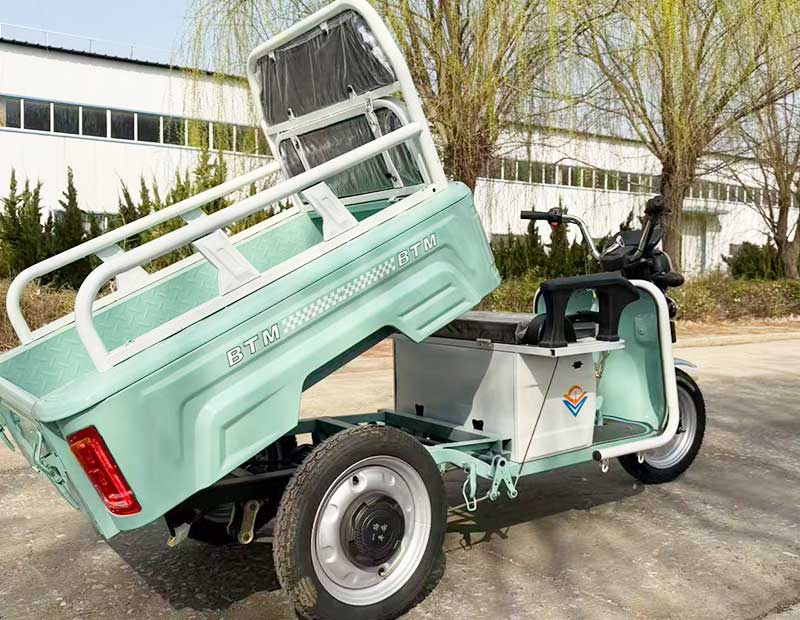
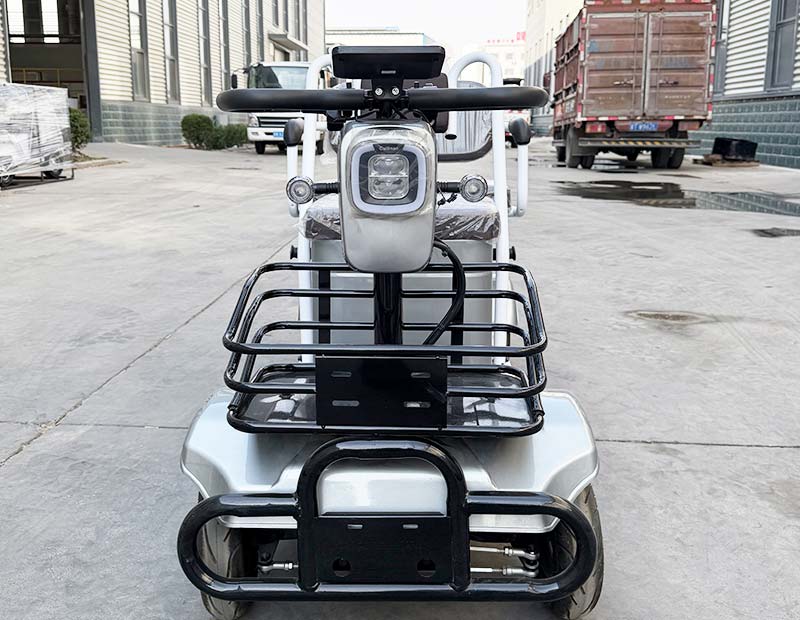
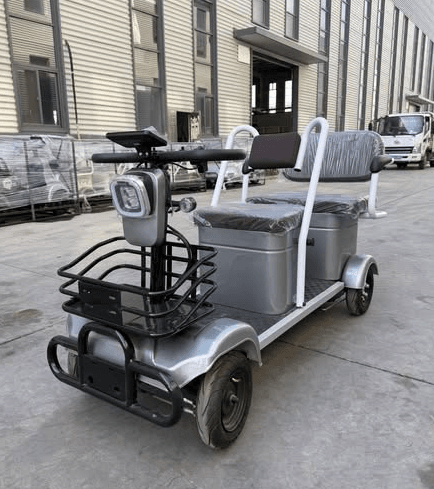
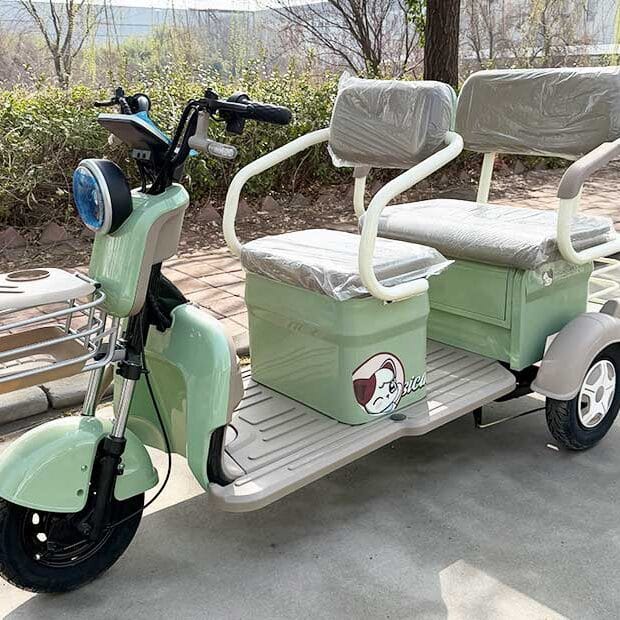
A cargo electric tricycle is a three-wheeled electric vehicle designed primarily for transporting goods and materials. It normally consists of an electric motor, battery system, cargo box or cargo platform, three-wheel chassis, braking system, steering system, suspension components, and other supporting equipment.
Unlike an ordinary electric bicycle, a cargo electric tricycle is specifically designed around transportation requirements. Its rear cargo area provides significantly more usable space, allowing users to carry larger and heavier loads than they could with a standard two-wheel electric vehicle.
The three-wheel configuration is another important feature. A cargo electric tricycle generally offers greater stability when carrying cargo because the load is supported by three wheels. This makes it particularly useful for commercial operations where stability, loading convenience, and transportation efficiency are important.
Depending on the application, a cargo electric tricycle can be equipped with different types of cargo bodies. Common configurations include open cargo platforms, enclosed cargo boxes, flatbeds, side-panel cargo beds, refrigerated boxes, and customized transportation compartments.
The basic structure of a cargo electric tricycle can be summarized as follows:
| Component | Main Function |
|---|---|
| Electric Motor | Provides driving power |
| Battery | Stores electrical energy |
| Cargo Box | Protects and carries goods |
| Cargo Platform | Provides loading space |
| Chassis | Supports the vehicle and cargo |
| Three-Wheel System | Provides stability and maneuverability |
| Braking System | Controls and improves stopping performance |
| Suspension | Helps improve ride comfort and stability |
| Controller | Manages motor operation |
| Lighting System | Supports safer operation in low-light conditions |
The exact configuration of a cargo electric tricycle varies according to the manufacturer and intended application. Businesses should therefore evaluate the vehicle based on actual transportation requirements instead of selecting a model based only on appearance or advertised specifications.
Why Choose a Cargo Electric Tricycle for Transportation?
The main advantage of a cargo electric tricycle is its ability to combine transportation capacity with efficient electric operation. For businesses that frequently move goods over short or medium distances, this combination can provide significant practical benefits.
Lower Operating Costs
Electric power can help reduce daily transportation expenses compared with traditional fuel-powered vehicles. A cargo electric tricycle does not require gasoline or diesel for normal operation, which can make energy costs more predictable.
For businesses operating multiple delivery vehicles, even small savings per trip can accumulate into significant annual savings. A cargo electric tricycle can therefore be an attractive option for companies that want to control operating expenses while maintaining regular delivery services.
Maintenance can also be relatively straightforward. Electric drivetrains have fewer conventional engine components than internal-combustion vehicles, which can simplify certain maintenance requirements.
Excellent Urban Maneuverability
Urban transportation often involves narrow roads, crowded markets, residential streets, alleys, and areas where large trucks are difficult to operate. The compact structure of a cargo electric tricycle allows it to move through many of these environments more easily.
A cargo electric tricycle can be particularly useful for last-mile delivery. Instead of using a large vehicle for every delivery route, businesses can use smaller electric cargo vehicles for the final transportation stage.
This can improve flexibility while reducing the space required for parking and loading.
Practical Cargo Capacity
The primary purpose of a cargo electric tricycle is transportation. Its rear cargo area can be designed for different products and industries.
For example, a cargo electric tricycle can transport:
- Food and beverages
- Agricultural products
- Packages and parcels
- Retail goods
- Construction materials
- Tools and equipment
- Spare parts
- Flowers and plants
- Cleaning supplies
- Market products
- Industrial components
- Household goods
The cargo structure can also be customized according to specific transportation requirements.
Easy Daily Operation
A cargo electric tricycle is designed to make short-distance transportation easier for operators. Electric drive systems can provide smooth acceleration and straightforward vehicle control.
For businesses that have employees performing frequent deliveries, easy operation can help improve workflow efficiency. Operators can spend less time dealing with complex vehicle controls and more time completing delivery tasks.
More Flexible Than Large Commercial Vehicles
Not every delivery requires a van or truck. Using a large vehicle for small loads can result in inefficient use of fuel, space, and manpower.
A cargo electric tricycle provides a middle ground between a standard electric bike and a larger commercial vehicle. It offers additional cargo space while maintaining a relatively compact vehicle size.
Key Applications of Cargo Electric Tricycle
One reason the cargo electric tricycle has become popular is its versatility. It can be used across different industries and environments.
Last-Mile Delivery
Last-mile delivery is one of the most common applications for a cargo electric tricycle. Online shopping, food delivery, local retail distribution, and parcel transportation all require flexible short-distance transportation.
A cargo electric tricycle can travel from distribution centers to customers, stores, restaurants, residential communities, or local collection points.
For businesses operating in dense urban environments, this type of vehicle can help simplify delivery routes.
Agricultural Transportation
Agricultural businesses often need to transport crops, seeds, fertilizer, tools, feed, and other materials around farms and nearby roads.
A cargo electric tricycle can serve as a convenient transport vehicle for short-distance agricultural operations. Depending on its configuration and load capacity, it can carry agricultural products from fields to storage areas, markets, or processing locations.
In areas where roads are narrow or conventional trucks are inconvenient, a cargo electric tricycle can provide additional flexibility.
Retail and Market Distribution
Markets and retail stores require frequent transportation of goods. A cargo electric tricycle can move products between warehouses, stores, stalls, and nearby customers.
The cargo area can be customized with protective covers, side panels, or enclosed boxes depending on the products being transported.
Industrial Parks and Warehouses
Inside large factories, industrial parks, warehouses, and logistics facilities, employees frequently need to move components and materials over relatively short distances.
A cargo electric tricycle can provide an efficient internal transportation solution. Its compact size allows it to operate in areas where larger vehicles may be difficult to maneuver.
Construction and Maintenance
Construction companies and maintenance teams can also use cargo electric tricycles to transport tools, spare parts, equipment, and materials.
A flatbed cargo electric tricycle can be particularly useful when quick loading and unloading are important.
Cargo Electric Tricycle vs. Traditional Transportation Vehicles
Before purchasing a cargo electric tricycle, businesses often compare it with motorcycles, electric scooters, vans, and small trucks.
Each vehicle type has its own advantages, but the cargo electric tricycle is particularly attractive for short-distance commercial transportation.
| Vehicle Type | Cargo Capacity | Maneuverability | Energy Cost | Short-Distance Use |
|---|---|---|---|---|
| Cargo Electric Tricycle | High | Excellent | Low | Excellent |
| Electric Scooter | Low | Excellent | Low | Good |
| Motorcycle | Medium | Excellent | Medium | Good |
| Small Van | High | Medium | Higher | Good |
| Small Truck | Very High | Lower | Higher | Good |
The cargo electric tricycle is not intended to replace every type of commercial vehicle. Instead, it is particularly suitable for transportation tasks where businesses need a balance between cargo capacity, operating cost, and maneuverability.
For example, using a large truck to deliver a few packages across a crowded neighborhood may not be efficient. A cargo electric tricycle can perform the same type of short-distance task with a smaller vehicle footprint.
Important Features to Consider When Buying a Cargo Electric Tricycle
Selecting the right cargo electric tricycle requires more than simply choosing the largest model. Businesses should consider how the vehicle will actually be used.
Motor Performance
Motor power directly affects acceleration, climbing ability, and overall driving performance.
Businesses operating on flat urban roads may have different requirements from agricultural or industrial users who regularly travel on slopes or uneven surfaces.
When selecting a cargo electric tricycle, buyers should evaluate motor performance based on:
- Expected cargo weight
- Road conditions
- Average travel distance
- Road gradient
- Operating frequency
- Weather conditions
Battery Capacity
Battery capacity is another important factor. A larger battery can generally provide more available energy, but it can also increase vehicle weight and cost.
The correct battery configuration should be selected according to the actual daily operating range.
| Application | Suggested Battery Consideration |
|---|---|
| Short Urban Delivery | Standard capacity may be sufficient |
| Daily Retail Distribution | Medium-to-high capacity |
| Agricultural Transportation | Capacity based on route length |
| Warehouse Operations | Focus on duty cycle and charging |
| Long Daily Routes | Higher capacity may be preferable |
A cargo electric tricycle should ideally complete its normal daily tasks without requiring unnecessary charging interruptions.
Cargo Box Size
Cargo space directly affects the usefulness of the vehicle. Buyers should consider both cargo volume and cargo weight.
For bulky but lightweight products, cargo box volume may be more important than maximum payload. For dense products, payload capacity becomes a more important consideration.
Businesses should therefore match the cargo box design to the goods they transport most frequently.
Payload Capacity
Payload capacity indicates how much cargo the cargo electric tricycle is designed to carry.
Overloading should always be avoided because excessive weight can affect braking, handling, acceleration, battery consumption, tire wear, and overall vehicle performance.
A suitable cargo electric tricycle should provide enough payload capacity for normal operations without requiring continuous operation at its maximum limit.
Braking Performance
A loaded cargo electric tricycle requires reliable braking performance. The braking system should be selected according to vehicle weight, cargo capacity, operating speed, and road conditions.
Businesses should pay particular attention to braking requirements when the vehicle will regularly carry heavy loads or operate on slopes.
Chassis Strength
The chassis supports the motor, battery, cargo structure, operator, and other components. A strong chassis is essential for commercial use.
For businesses using a cargo electric tricycle every day, durability can be more important than appearance.
Cargo Body Design
Different cargo applications require different cargo body structures.
| Cargo Body | Recommended Application |
|---|---|
| Open Platform | Construction materials and equipment |
| Side-Panel Bed | Agricultural products and general goods |
| Enclosed Box | Parcels and retail products |
| Waterproof Box | Goods requiring weather protection |
| Customized Box | Specialized commercial applications |
Choosing the correct cargo body can improve both loading efficiency and product protection.
How a Cargo Electric Tricycle Improves Delivery Efficiency
Transportation efficiency is not simply about vehicle speed. It also depends on loading, unloading, route flexibility, operating cost, and vehicle availability.
A cargo electric tricycle can improve delivery efficiency in several ways.
First, its compact structure makes it easier to access locations that are difficult for large vehicles to reach.
Second, its cargo platform or box can be configured specifically for the products being delivered.
Third, electric operation is well suited to frequent stop-and-go transportation. Delivery vehicles often make many short trips during the day, and this operating pattern can be suitable for electric vehicles.
Fourth, a cargo electric tricycle can reduce the amount of space required for parking and loading.
For local businesses, these advantages can translate into more completed deliveries per working day.
Cargo Electric Tricycle for Last-Mile Logistics
The development of e-commerce has increased the importance of last-mile transportation. While long-distance logistics may rely on trucks and large distribution centers, the final stage of delivery often requires smaller and more flexible vehicles.
A cargo electric tricycle can be used for this final stage.
For example, a typical delivery process may include:
- Goods arrive at a local distribution center.
- Packages are sorted according to delivery areas.
- Packages are loaded into the cargo electric tricycle.
- The operator follows a local delivery route.
- Multiple customers are served during one trip.
- Empty cargo space is reused for additional deliveries.
- The vehicle returns for another loading cycle.
This process can be particularly effective in cities where traffic congestion and limited parking make conventional delivery vehicles less convenient.
Cargo Electric Tricycle for Agricultural Businesses
Agriculture is another important market for cargo electric tricycles. Farms often need to move materials across relatively short distances multiple times a day.
A cargo electric tricycle can be used for:
- Harvest transportation
- Seed transportation
- Fertilizer transportation
- Feed transportation
- Tool transportation
- Farm supply distribution
- Produce delivery
- Small equipment transportation
For agricultural users, the cargo electric tricycle should be selected based on terrain, road conditions, expected load, and daily working hours.
If the vehicle is expected to operate on rough roads, the chassis, tires, suspension, motor performance, and braking system should receive particular attention.
Maintenance Tips for a Cargo Electric Tricycle
Regular maintenance can help extend the service life of a cargo electric tricycle and maintain reliable transportation performance.
Check the Battery Regularly
The battery is one of the most important components of a cargo electric tricycle. Operators should follow the manufacturer’s charging and maintenance recommendations.
The battery area should be kept clean and dry, and abnormal performance should be inspected promptly.
Inspect Tires
Because cargo loads can be substantial, tire condition is especially important.
Operators should regularly check:
- Tire pressure
- Tire wear
- Tire damage
- Wheel condition
- Loose components
Proper tire maintenance can contribute to better handling and energy efficiency.
Check Brakes
Brake performance should be inspected regularly, especially when the cargo electric tricycle is used frequently or carries heavy loads.
Any unusual noise, reduced braking response, or abnormal brake behavior should be addressed promptly.
Inspect the Cargo Structure
The cargo box, platform, side panels, fasteners, and support structures should also be checked regularly.
A secure cargo area helps prevent goods from shifting or falling during transportation.
Follow the Recommended Load
Overloading can increase stress on the motor, chassis, tires, suspension, battery, and braking system.
Operating within the recommended payload range is therefore essential for long-term reliability.
How to Select the Right Cargo Electric Tricycle for Your Business
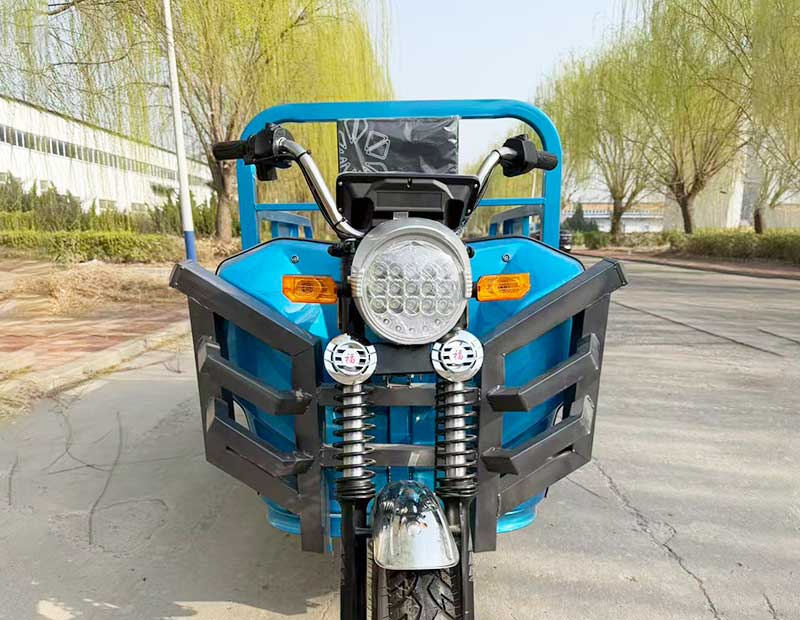
Businesses should start the selection process by identifying their actual transportation requirements.
The following questions can help:
- How much cargo needs to be transported on each trip?
- What is the average daily travel distance?
- Are the roads flat or hilly?
- Will the vehicle operate indoors or outdoors?
- Does the cargo need weather protection?
- How frequently will the vehicle be used?
- What charging facilities are available?
- What type of cargo box is required?
- What level of customization is needed?
- What is the expected service life?
A simple selection framework is shown below.
| Requirement | Key Specification |
|---|---|
| Heavy Cargo | Higher payload capacity |
| Long Daily Routes | Larger battery capacity |
| Hilly Roads | Strong motor performance |
| Urban Delivery | Compact dimensions |
| Weather-Sensitive Cargo | Enclosed cargo box |
| Agricultural Use | Durable chassis and suitable tires |
| Warehouse Use | Maneuverability and compact design |
| Specialized Goods | Customized cargo body |
This approach helps businesses choose a cargo electric tricycle according to practical requirements rather than selecting a vehicle based only on price.
Customization Options for Cargo Electric Tricycle
Commercial users often have different transportation requirements. For this reason, customization can be an important part of cargo electric tricycle manufacturing.
Possible customization options include:
- Cargo box dimensions
- Cargo platform configuration
- Side panels
- Roof or canopy
- Enclosed cargo box
- Branding and exterior appearance
- Seating configuration
- Battery capacity
- Motor configuration
- Lighting systems
- Suspension configuration
- Tire selection
- Safety equipment
- Specialized cargo compartments
For example, a food distributor may need an enclosed cargo body, while a construction company may prefer an open flatbed.
An agricultural customer may require a cargo structure that makes it easier to load boxes of vegetables or harvested crops.
Therefore, working with an experienced cargo electric tricycle manufacturer can be valuable for businesses with specialized requirements.
Why Quality Matters in a Cargo Electric Tricycle
A cargo electric tricycle used for commercial transportation may operate for many hours every day. This means durability should be an important purchasing consideration.
A high-quality cargo electric tricycle should have a reliable structural design, suitable motor performance, dependable braking, appropriate battery configuration, and durable cargo components.
Manufacturing quality also affects long-term operating costs. A vehicle that requires frequent repairs may create downtime and additional expenses.
When evaluating a cargo electric tricycle supplier, buyers should consider:
- Manufacturing experience
- Product quality
- Factory capabilities
- Quality control procedures
- Component selection
- Customization capabilities
- Technical support
- Spare parts availability
- Warranty policy
- Export experience
For B2B buyers, supplier reliability can be just as important as vehicle specifications.
Cargo Electric Tricycle for Global Commercial Markets
The demand for compact electric transportation is growing in many regions because businesses need practical solutions for local delivery and material transportation.
A cargo electric tricycle can be particularly useful in markets where short-distance transportation represents a large part of daily commercial activity.
Potential applications include urban delivery, agricultural transportation, local distribution, industrial transportation, market logistics, and small-business delivery services.
Different regions may have different requirements regarding vehicle dimensions, electrical systems, road regulations, safety equipment, and certification. Buyers should therefore confirm local requirements before importing or purchasing a cargo electric tricycle.
For international buyers, communication with the manufacturer is also important. Technical specifications, battery options, charging systems, spare parts, packaging, shipping arrangements, and after-sales support should all be discussed before placing a commercial order.
Cost Considerations When Buying a Cargo Electric Tricycle
Purchase price is an important factor, but it should not be the only consideration.
A lower initial price does not necessarily mean lower total operating costs. Businesses should evaluate the total cost of ownership.
Important cost factors include:
| Cost Factor | Consideration |
|---|---|
| Purchase Price | Initial investment |
| Battery | Replacement and charging |
| Electricity | Daily operating cost |
| Maintenance | Routine service expenses |
| Tires | Replacement frequency |
| Spare Parts | Availability and price |
| Downtime | Potential business losses |
| Service | Technical support |
| Vehicle Life | Long-term value |
A reliable cargo electric tricycle can provide better value if it delivers consistent performance over a long service period.
Businesses should therefore compare the overall value of different vehicles instead of focusing only on the initial purchase price.
Safety Considerations for Cargo Electric Tricycle Operation
Safety is essential when operating any commercial vehicle.
Operators should follow the manufacturer’s instructions and local traffic regulations. Cargo should be loaded evenly and secured properly to prevent movement during transportation.
The vehicle should not be overloaded, and operators should adjust their driving according to road, weather, traffic, and cargo conditions.
Important safety practices include:
- Inspect the vehicle before operation.
- Secure cargo properly.
- Avoid exceeding the recommended payload.
- Maintain appropriate tire pressure.
- Check brakes regularly.
- Use lights and indicators correctly.
- Follow local traffic regulations.
- Reduce speed on uneven or slippery roads.
- Avoid sudden turns when carrying heavy cargo.
- Charge the battery according to manufacturer instructions.
These basic practices can help improve the reliability and safety of daily cargo electric tricycle operations.
Future Development of Cargo Electric Tricycle
The future of commercial transportation is increasingly focused on efficiency, electrification, connectivity, and flexible vehicle design.
As electric vehicle technology develops, cargo electric tricycles are likely to become more capable and versatile.
Potential developments include improved battery technology, more efficient motors, smarter vehicle controllers, better cargo body designs, advanced monitoring systems, and more specialized configurations.
For businesses, these developments may make cargo electric tricycles suitable for an even wider range of transportation applications.
The growth of e-commerce and urban delivery is also expected to continue supporting demand for compact commercial electric vehicles.
As businesses search for practical alternatives to traditional delivery vehicles, the cargo electric tricycle can remain an important part of the local transportation ecosystem.
If you need electric tricycles or other services, please contact us!
Email: lyf18265443311@gmail.com
WhatsApp: +86 15853422441
WhatsApp: +86 18265443311
Phone:+86 15853422441
Facebook: https://www.facebook.com/people/NengFu-New-Energy-Vehicle/61577819953210/
Youtube: https://www.youtube.com/@Cargo-car/shorts
Conclusion
A cargo electric tricycle provides a practical combination of cargo capacity, electric efficiency, maneuverability, and flexible operation. For businesses involved in local delivery, agriculture, retail distribution, warehouse transportation, industrial logistics, and other short-distance applications, it can be an effective transportation solution.
The biggest advantages of a cargo electric tricycle include lower energy consumption, compact dimensions, practical cargo space, easy operation, and excellent maneuverability. These characteristics make it particularly suitable for environments where large commercial vehicles are inefficient or difficult to operate.
However, choosing the right cargo electric tricycle requires careful consideration. Motor performance, battery capacity, payload, cargo box design, chassis strength, braking performance, road conditions, and daily operating distance should all be evaluated.
For commercial buyers, supplier quality is equally important. An experienced cargo electric tricycle manufacturer can provide suitable configurations, customization options, technical support, spare parts, and long-term service.
Whether the goal is to improve last-mile delivery, transport agricultural products, move goods around a warehouse, or support local commercial operations, a cargo electric tricycle can provide an efficient and flexible way to move goods.
As businesses continue to seek cost-effective and sustainable transportation solutions, the cargo electric tricycle is positioned to play an increasingly important role in modern logistics and commercial transportation.
FAQ
What is a cargo electric tricycle used for?
A cargo electric tricycle is mainly used to transport goods and materials over short and medium distances. Common applications include last-mile delivery, agricultural transportation, retail distribution, warehouse logistics, market transportation, industrial material handling, and local commercial delivery.
How much cargo can a cargo electric tricycle carry?
The payload capacity depends on the specific model, motor system, chassis design, cargo structure, and manufacturer specifications. Buyers should select a cargo electric tricycle based on their normal transportation requirements and should never exceed the manufacturer’s recommended payload capacity.
How far can a cargo electric tricycle travel on one charge?
The range depends on battery capacity, motor efficiency, cargo weight, road conditions, driving speed, temperature, terrain, and driving habits. A cargo electric tricycle designed for longer daily routes may require a larger battery capacity, while a vehicle used for short urban deliveries may need a smaller battery configuration.
Can a cargo electric tricycle be customized?
Yes. Depending on the manufacturer, a cargo electric tricycle can often be customized with different cargo box sizes, cargo platforms, side panels, enclosed bodies, battery configurations, motor options, lighting systems, tires, and other features. Commercial buyers should discuss their specific transportation requirements with the manufacturer before production.
How do I choose the best cargo electric tricycle for my business?
Start by determining your required payload, daily travel distance, road conditions, cargo type, operating environment, charging availability, and expected frequency of use. Then compare motor performance, battery capacity, cargo dimensions, chassis strength, braking performance, customization options, warranty, spare parts, and supplier support to select the most suitable cargo electric tricycle.