Introduction
Transportation is an essential part of modern life, whether people are commuting to work, shopping for groceries, traveling around residential communities, visiting golf courses, or managing daily business activities. As transportation costs continue to influence household and business budgets, more people are exploring practical alternatives that combine affordability, comfort, and energy efficiency. Affordable Electric 4 Wheelers for Smart Daily Travel have become an attractive option for buyers who want convenient mobility without the ongoing expenses associated with some traditional fuel-powered vehicles.
Electric four-wheelers come in a variety of designs, from compact neighborhood electric vehicles and golf carts to utility vehicles and low-speed electric transportation models. Depending on their specifications, these vehicles can support short-distance commuting, recreational travel, campus transportation, resort operations, and light commercial activities. Their four-wheel design can provide a stable platform, while electric powertrains offer quiet operation and convenient charging.
For many buyers, affordability means more than paying a low purchase price. It also involves evaluating electricity consumption, battery replacement, maintenance, insurance, financing, and expected service life. A vehicle that costs less initially may not deliver the best long-term value if its battery has limited durability, its components are difficult to replace, or its configuration does not meet the owner’s daily needs.
This is why Affordable Electric 4 Wheelers for Smart Daily Travel deserve careful consideration. By comparing vehicle types, battery options, driving range, safety features, and operating expenses, buyers can identify a suitable model for their particular circumstances.
Businesses can also benefit from choosing electric four-wheelers for appropriate applications. Golf courses, hotels, resorts, factories, campuses, and property management companies may use these vehicles to transport staff, visitors, equipment, and supplies over relatively short distances.
This article explores the main benefits of Affordable Electric 4 Wheelers for Smart Daily Travel, explains how to evaluate specifications, compares different vehicle types, and provides practical advice for selecting a cost-effective electric vehicle. Whether you are a private buyer, a fleet operator, or a business owner, understanding these factors can help you make a more informed purchasing decision.
What Are Affordable Electric 4 Wheelers for Smart Daily Travel?

Affordable Electric 4 Wheelers for Smart Daily Travel are electric-powered vehicles with four wheels designed to provide convenient transportation at a reasonable purchase and operating cost. The term covers several vehicle categories, and not every model is suitable for the same purpose.
Some four-wheelers are designed primarily for recreational use, while others are intended for commercial transportation, neighborhood mobility, or specialized industrial applications. Buyers should understand these differences before comparing prices.
Compact Electric Four-Wheelers
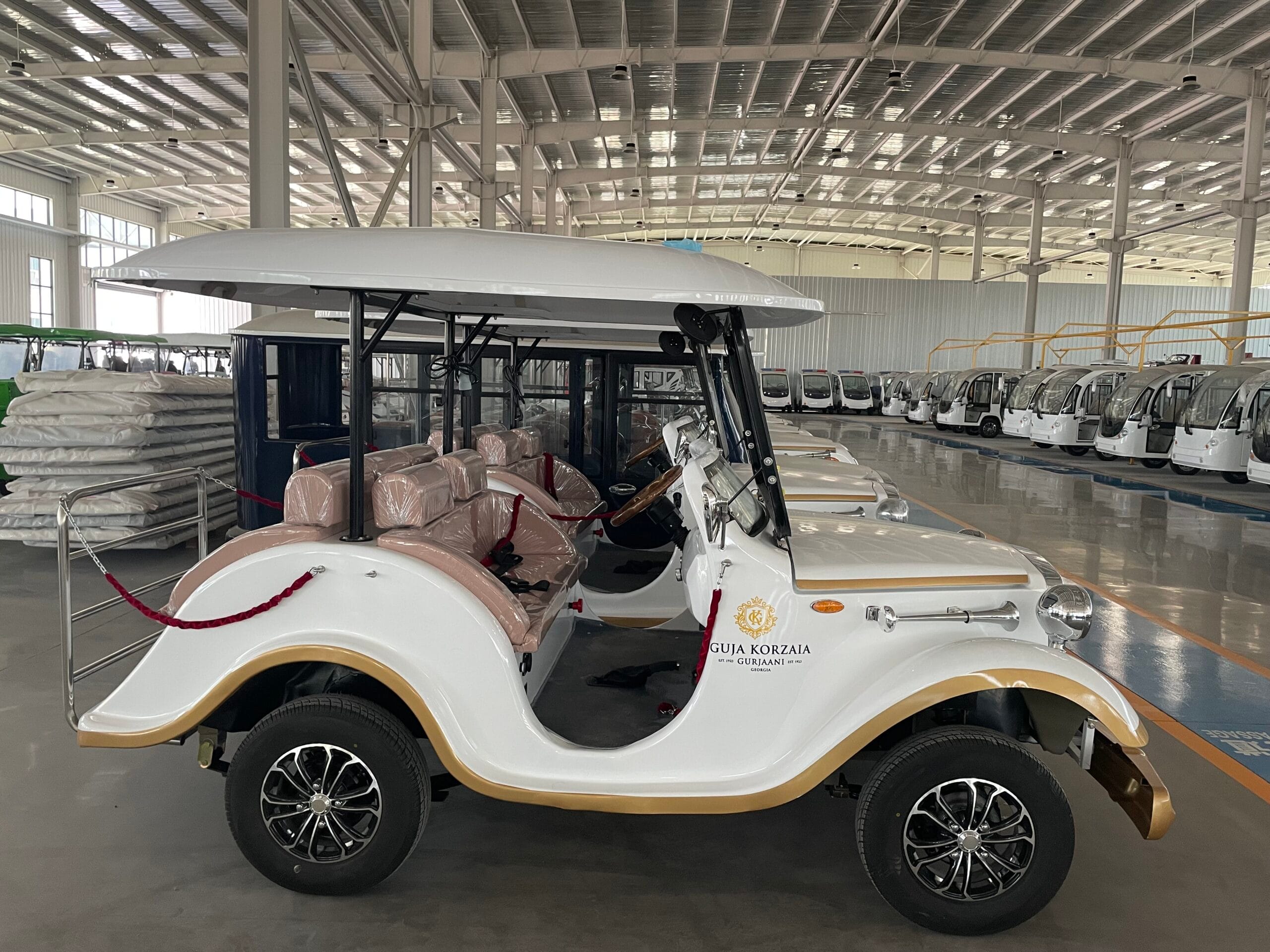
Compact electric four-wheelers are designed to occupy relatively little space while providing seating for one or more passengers. Depending on the model, they may be useful for private communities, large residential properties, resorts, campuses, and other environments where short-distance travel is common.
Their compact dimensions can make parking and maneuvering easier than with larger vehicles. Some models also feature straightforward controls that are convenient for regular low-speed transportation.
However, compact dimensions do not automatically make a vehicle suitable for public roads. Buyers should confirm the vehicle’s legal classification, permitted speed, safety equipment, and registration requirements before using it on public streets.
Electric Golf Carts
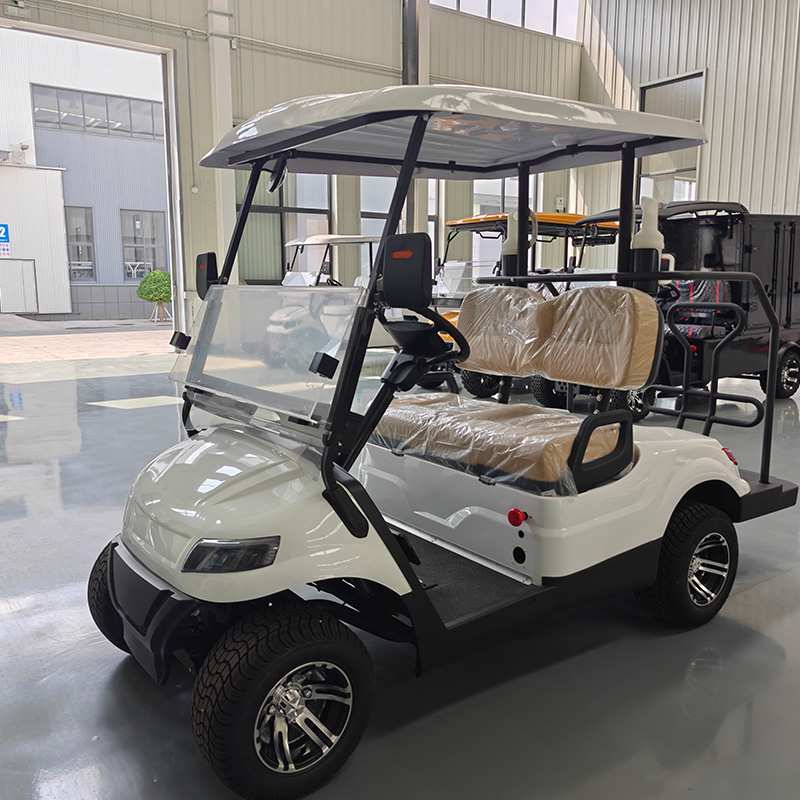
Electric golf carts are widely associated with golf courses, but they can also serve other private-property transportation needs. Depending on their configuration, they may transport passengers, carry equipment, or support hospitality operations.
A standard golf cart is not necessarily equivalent to a road-approved electric car. Its permitted operating environment depends on local regulations, equipment, and vehicle classification.
For buyers interested in Affordable Electric 4 Wheelers for Smart Daily Travel, golf carts can be attractive when their travel requirements involve relatively short distances, low speeds, and accessible charging facilities.
Electric Utility Vehicles
Electric utility vehicles are designed to transport tools, supplies, equipment, or other cargo. They may feature a rear cargo bed, enclosed storage compartment, or specialized working platform.
These vehicles can support maintenance teams, agricultural businesses, warehouses, hotels, resorts, and industrial facilities.
Their suitability depends on factors such as rated payload, cargo dimensions, motor performance, braking capacity, and ground clearance. Businesses should not assume that a passenger-focused electric four-wheeler can safely perform heavy-duty work.
Low-Speed Neighborhood Electric Vehicles
Some electric four-wheelers are designed for short-distance travel in approved neighborhood environments. Depending on local classification, these vehicles may offer features such as seat belts, lighting systems, mirrors, and other road-related equipment.
Buyers must distinguish between vehicles that are legally approved for public-road use and those restricted to private property. The manufacturer’s marketing description alone is not sufficient proof of road legality.
Why Affordable Electric 4 Wheelers for Smart Daily Travel Are Becoming Popular
Electric mobility is attracting attention because buyers increasingly consider total transportation expenses, ease of use, and environmental impact when selecting vehicles.
Affordable Electric 4 Wheelers for Smart Daily Travel can provide practical benefits when their capabilities match the owner’s daily routine.
Lower Energy Costs
Electric vehicles use electricity rather than gasoline or diesel for propulsion. Depending on local electricity tariffs and the efficiency of the vehicle, charging can cost less than fueling a comparable vehicle for the same distance.
The actual savings depend on several factors, including battery size, driving speed, terrain, payload, driving habits, and charging efficiency.
For example, a vehicle that travels a short route around a private property may consume relatively little electricity each day. A larger vehicle carrying heavy loads over hilly terrain may require considerably more energy.
Buyers should evaluate actual energy consumption rather than relying exclusively on general statements about low running costs.
Quiet Driving Experience
Electric motors generally operate more quietly than combustion engines. This can be beneficial in residential communities, resort environments, campuses, and other places where noise reduction is desirable.
Quiet operation may improve the experience of passengers and reduce disturbances during early morning or evening transportation activities.
Nevertheless, quiet vehicles still require appropriate pedestrian awareness. Drivers should follow operating rules and use any required warning devices in environments with foot traffic.
Convenient Daily Charging
For people who travel predictable short distances, charging an electric four-wheeler at a suitable location can be convenient.
A private-property vehicle may be charged overnight or during periods when it is not in use, provided the charging equipment and electrical supply meet the manufacturer’s requirements.
Businesses operating multiple vehicles should develop a charging schedule that accounts for daily routes, battery capacity, charging time, and fleet availability.
Charging convenience is especially important for businesses that depend on vehicles throughout the working day.
Reduced Local Exhaust Emissions
Battery-electric vehicles produce no tailpipe emissions while driving. This can help reduce local air pollution when they replace comparable fuel-powered vehicles.
Their overall environmental impact depends on electricity generation, battery manufacturing, vehicle lifespan, and end-of-life recycling. Buyers interested in sustainability should consider these factors alongside the absence of exhaust emissions during use.
Flexible Transportation Options
Four-wheel electric vehicles are available in configurations for passengers, cargo, recreation, and light-duty commercial activities.
This variety makes it possible to choose a vehicle that meets a specific requirement without purchasing a larger vehicle than necessary.
A hospitality business may need a passenger cart, while a maintenance department may require a cargo bed and additional storage. Matching the vehicle to its intended task helps avoid unnecessary expenditure.
Main Benefits of Choosing Affordable Electric 4 Wheelers for Smart Daily Travel
The main advantage of electric four-wheelers is not simply that they use electricity. Their value comes from combining an appropriate vehicle design with a practical operating cost and a suitable range of applications.
Budget-Friendly Ownership
Affordable Electric 4 Wheelers for Smart Daily Travel can provide a cost-effective solution for people who do not need the speed, range, or size of a conventional passenger car.
A smaller vehicle may be sufficient for moving around a resort, transporting supplies within a property, or completing short trips in an approved neighborhood environment.
The best choice depends on the actual transportation task. Buyers should avoid paying for features they will rarely use, but they should also avoid removing essential safety equipment or choosing a battery that cannot meet their daily needs.
Simple Routine Maintenance
Electric powertrains have fewer moving engine components than conventional internal combustion powertrains. They do not require engine oil changes or routine exhaust-system maintenance.
However, electric vehicles still require regular inspections and servicing.
Common maintenance items include tires, brakes, suspension, steering, lighting, electrical connectors, charging equipment, and battery condition. The required maintenance schedule depends on the vehicle design and how it is used.
A reliable supplier should provide a maintenance manual and explain which inspections owners can perform safely and which require qualified technicians.
Useful for Short-Distance Travel
Many everyday journeys cover relatively short distances. These include moving between buildings, traveling around private communities, carrying supplies between facilities, and transporting visitors around large properties.
For these tasks, a compact electric four-wheeler may provide adequate performance without the costs associated with a larger vehicle.
Buyers should calculate their typical daily distance and include a reasonable reserve for detours, additional trips, battery aging, and weather-related changes in performance.
Potential Business Savings
Businesses can use electric four-wheelers for suitable transportation tasks while evaluating the costs of energy, maintenance, labor, downtime, and vehicle replacement.
For example, a resort that operates several passenger carts may be able to plan charging during quieter periods. A warehouse may use cargo vehicles for internal transportation where the vehicles are approved for the environment.
The financial outcome depends on utilization rates and local costs. Fleet managers should calculate total ownership expenses before deciding whether an electric vehicle will outperform an alternative.
Comparing Different Types of Affordable Electric 4 Wheelers
Before purchasing Affordable Electric 4 Wheelers for Smart Daily Travel, buyers should compare available vehicle categories and determine which one fits their needs.
The following table provides a general comparison.
| Vehicle type | Main application | Key advantage | Important consideration |
|---|---|---|---|
| Compact electric four-wheeler | Short-distance personal travel | Small footprint | Road-use classification |
| Electric golf cart | Golf courses and private properties | Convenient low-speed transportation | May not be road legal |
| Electric utility vehicle | Cargo and maintenance tasks | Practical cargo capacity | Payload and braking limits |
| Neighborhood electric vehicle | Approved local road travel | Designed for specified road environments | Local registration requirements |
| Enclosed electric utility vehicle | Selected commercial tasks | Weather protection | Additional weight and energy demand |
| Multi-passenger electric cart | Resorts and campuses | Passenger transportation | Seating capacity and safety equipment |
The most appropriate option depends on the location, expected passengers, cargo requirements, and daily route.
Choosing a Vehicle for Personal Use
Private buyers may prioritize ease of operation, comfort, charging convenience, and price.
If the vehicle will be used only on private property, a compact cart may be adequate. If the buyer plans to travel on public roads, regulatory requirements become much more important.
Buyers should also consider whether the vehicle offers sufficient seating, storage, weather protection, and practical range.
Choosing a Vehicle for Business Use
Businesses generally need to consider reliability, availability, maintenance requirements, and the cost of keeping vehicles in service.
A vehicle with a slightly higher purchase price may offer better value if it provides suitable cargo capacity, readily available replacement parts, and dependable after-sales support.
For fleet purchases, standardizing specifications can reduce training requirements and simplify maintenance planning.
Choosing a Vehicle for Recreation
Recreational buyers may prioritize comfort, appearance, seating, accessories, and maneuverability.
However, recreational features should not take priority over the vehicle’s intended operating environment and safety requirements.
A vehicle intended for golf courses or private grounds should not be assumed suitable for highways or unrestricted public-road use.
How to Evaluate Battery Performance and Driving Range
Battery performance is one of the most important considerations when buying Affordable Electric 4 Wheelers for Smart Daily Travel.
A vehicle’s advertised range can be useful for initial comparison, but actual performance depends on several operating conditions.
Understand Battery Capacity
Battery capacity is commonly expressed in kilowatt-hours for many modern electric vehicles, while battery voltage and ampere-hours may also appear in product specifications.
These measurements describe different aspects of a battery system. Voltage and ampere-hours should not be compared independently without considering the overall configuration.
For example, two vehicles may advertise the same ampere-hour figure but use different battery voltages, resulting in different nominal energy capacities.
Buyers should ask the supplier to explain the battery’s rated capacity and confirm that the information applies to the exact vehicle configuration being purchased.
Compare Battery Chemistries
Lead-acid and lithium-ion batteries are among the battery types that may be available, depending on the vehicle category and supplier.
| Feature | Lead-acid battery | Lithium-ion battery |
|---|---|---|
| Initial cost | Often lower | Often higher |
| Weight | Generally heavier for comparable energy | Generally lighter for comparable energy |
| Charging | Depends on battery type and charger | Depends on chemistry and battery management system |
| Routine care | Some types require additional maintenance | Usually limited routine maintenance |
| Service life | Varies with use and maintenance | Varies with chemistry, temperature, and charging habits |
| Replacement planning | Requires appropriate handling and recycling | Requires appropriate handling and recycling |
These are general tendencies, not guarantees for every product. Battery quality, operating temperature, depth of discharge, charging practices, and manufacturing standards all affect performance.
A buyer should evaluate battery warranty terms and replacement costs as carefully as the original purchase price.
Estimate Realistic Driving Range
Driving range depends on more than battery capacity.
Important factors include vehicle weight, passenger or cargo load, speed, terrain, tire pressure, temperature, and driving style.
Frequent acceleration and climbing hills may increase energy consumption. Cold weather can also affect battery performance, while prolonged exposure to high temperatures may accelerate battery degradation.
For commercial operations, the safest planning approach is to use a realistic route estimate rather than relying on the highest advertised range.
A business that requires a vehicle to complete multiple daily trips should also consider charging opportunities and the effect of battery aging over time.
Follow Proper Charging Practices
Charging should always follow the manufacturer’s instructions.
Owners should use compatible charging equipment, avoid damaged cables, keep charging connections in suitable conditions, and follow any specified temperature or ventilation requirements.
Businesses should also ensure that charging areas do not obstruct walkways or create hazards around other vehicles.
For lithium battery systems, owners should follow the specified battery management and charging procedures rather than attempting unauthorized electrical modifications.
Important Safety Features for Daily Electric Travel
Affordable Electric 4 Wheelers for Smart Daily Travel should be evaluated according to their intended operating environment and safety requirements.
Low purchase prices are not a sufficient reason to overlook braking performance, occupant protection, lighting, or vehicle stability.
Braking Systems
Brakes must be suitable for the vehicle’s weight, intended speed, and operating conditions.
Buyers should confirm the braking configuration and ask whether the vehicle has an appropriate parking brake. If the vehicle will carry passengers or cargo, its braking performance should be evaluated under the intended loading conditions.
Routine brake inspections are important because worn or incorrectly adjusted brakes can increase stopping distances.
Seat Belts and Occupant Protection
Depending on the vehicle type and legal classification, appropriate occupant protection may include seat belts, approved seating arrangements, and other safety equipment.
Buyers should verify that the vehicle meets applicable requirements for its intended use.
Passenger capacity should never be exceeded, and passengers should use the installed safety equipment as directed.
Lighting and Visibility
Headlights, tail lights, brake lights, turn signals, reflectors, and mirrors can help improve visibility where required.
The specific equipment required depends on the vehicle category and location.
For use in areas shared with pedestrians, drivers should maintain low speeds where appropriate, observe traffic rules, and remain attentive even when the vehicle operates quietly.
Stability and Load Distribution
Four wheels can provide a stable platform, but stability still depends on the vehicle’s design, suspension, center of gravity, tire condition, and load distribution.
Cargo should be secured and distributed according to the manufacturer’s instructions.
Excessive loads, abrupt turns, steep slopes, and uneven surfaces can increase the risk of loss of control. Buyers should ask for the rated payload and operating limitations rather than relying on general marketing descriptions.
Affordable Electric 4 Wheelers for Smart Daily Travel in Different Industries
Electric four-wheelers can support a range of commercial activities when their specifications match the intended task.
Golf Courses and Resorts
Golf courses and resorts often require transportation over private roads, paths, and large landscaped areas.
Electric carts can transport guests, staff, equipment, and supplies while offering relatively quiet operation.
Passenger models may prioritize seating and comfort, while utility models may include a rear cargo platform for maintenance equipment.
Businesses should evaluate battery range, seating capacity, charging schedules, terrain, weather protection, and replacement parts.
A resort with multiple carts may benefit from standardizing the fleet so that maintenance teams can use a consistent set of spare parts.
Hotels and Hospitality Operations
Hotels may use electric carts to move luggage, deliver supplies, or transport guests within large properties where such vehicles are permitted.
Enclosed or weather-protected configurations may be helpful in areas with frequent rain or strong sunlight.
The selected vehicle should provide appropriate cargo arrangements and occupant protection. Hotel managers should also establish designated routes and operator training procedures.
Warehouses and Factories
Electric utility vehicles may transport tools, components, packaging materials, and supplies between work areas.
Their suitability depends on load capacity, turning dimensions, floor conditions, visibility, and workplace safety requirements.
Businesses should verify whether the vehicle is designed for indoor operation and ensure that battery charging arrangements are compatible with site safety procedures.
The vehicle should not be used in environments where its electrical system or design is unsuitable for the operating conditions.
Farms and Agricultural Properties
On farms, electric four-wheelers may support short-distance transportation of supplies, tools, and selected loads.
Buyers should pay attention to tire design, ground clearance, traction, suspension, and weather protection.
Rough terrain can place additional stress on frames, wheels, and electrical components. A model designed mainly for smooth pavement may not be appropriate for muddy fields or steep paths.
Residential Communities
Private residential communities may use compact electric vehicles for maintenance, security support, and other approved transportation tasks.
Residents may also be interested in electric four-wheelers for short-distance movement within permitted areas.
Before purchase, buyers should confirm community rules, access restrictions, parking arrangements, and any local requirements that govern the operation of electric vehicles.
How to Calculate the Total Cost of Ownership
A key benefit of evaluating Affordable Electric 4 Wheelers for Smart Daily Travel is the opportunity to compare the complete cost of ownership rather than focusing only on the initial price.
The total cost of ownership can include purchase price, charging expenses, routine maintenance, battery replacement, insurance, registration, financing, and eventual resale value.
Initial Purchase Price
The purchase price varies according to vehicle size, battery type, motor output, seating capacity, cargo design, accessories, and manufacturing quality.
A basic electric golf cart may cost less than a larger enclosed utility vehicle with a higher-capacity battery.
Buyers should request itemized quotations so that they understand which components and services are included.
Charging Expenses
Charging expenses depend on energy consumption and local electricity tariffs.
A simplified formula is:
Annual charging cost = annual electricity consumption × electricity price per kWh
For example, assume a vehicle consumes 5 kWh of electricity for each 100 kilometers of travel and completes 6,000 kilometers annually.
Its estimated annual electricity consumption would be:
5 kWh × 60 = 300 kWh.
If electricity costs $0.25 per kWh, the estimated annual charging expense would be:
300 kWh × $0.25 = $75.
This example is hypothetical. Actual consumption depends on the specific vehicle, route, load, and charging losses.
Maintenance and Battery Replacement
Routine maintenance expenses may include tires, brakes, suspension parts, inspections, and repairs.
Battery replacement can represent a significant cost over the vehicle’s service life. Its timing depends on battery quality, charging habits, temperature exposure, operating frequency, and warranty coverage.
Buyers should request realistic replacement cost information and avoid assuming that the original battery will last for a fixed number of years under all conditions.
Example Total Cost Comparison
The following example demonstrates how buyers can organize their cost estimates. The numbers are illustrative only and are not market quotations.
| Expense category | Electric four-wheeler | Alternative fuel-powered vehicle |
|---|---|---|
| Initial purchase | $5,000 | $6,500 |
| Energy over five years | $500 | $3,000 |
| Routine maintenance over five years | $900 | $1,500 |
| Battery or major powertrain allowance | $1,000 | $700 |
| Other operating expenses | $600 | $800 |
| Total before resale value | $8,000 | $12,500 |
This example suggests that the electric vehicle could have a lower five-year cost under the stated assumptions. It does not establish that every electric four-wheeler will be cheaper than every alternative.
Actual comparisons should use local prices, similar vehicle capabilities, realistic usage, and equivalent operating requirements.
How to Choose the Right Supplier
The supplier plays a major role in vehicle quality, delivery reliability, technical support, and long-term ownership experience.
When comparing Affordable Electric 4 Wheelers for Smart Daily Travel, buyers should look beyond product images and headline prices.
Check Company Background
Review the supplier’s business identity, product range, operating history, manufacturing role, and experience serving customers in the intended market.
Some companies manufacture their own vehicles, while others work with partner factories. Both models can be viable, but the buyer should understand who controls production quality and who is responsible for warranty support.
For larger purchases, buyers may request factory information, references, or an independent inspection.
Request Detailed Specifications
A reliable supplier should provide clear information about the exact vehicle being quoted.
Important details include motor power, battery chemistry and capacity, charging requirements, maximum speed, rated range, seating capacity, payload, vehicle dimensions, braking system, and warranty terms.
Buyers should also request maintenance documentation and information about replacement parts.
A specification sheet should identify the precise model and configuration rather than provide generic information that may apply to several products.
Evaluate Quality Control
Quality control should cover components, assembly, and finished-vehicle inspection.
Relevant checks may include frame condition, electrical wiring, battery installation, brake function, steering, lighting, and charging operation.
For customized or bulk orders, buyers may request a sample or arrange a pre-shipment inspection.
Any changes to approved specifications should be communicated and documented before production is completed.
Compare After-Sales Support
After-sales service matters because an unavailable replacement component can keep a vehicle out of service.
Ask about warranty coverage, replacement part availability, technical assistance, troubleshooting procedures, and expected response times.
Businesses buying several vehicles should consider stocking frequently used spare parts and standardizing components across their fleet.
Compare Quotes Fairly
The lowest quotation may exclude accessories or offer a different battery configuration.
Before making a decision, compare the complete vehicle specifications and the commercial terms offered by each supplier.
| Supplier evaluation factor | What to verify |
|---|---|
| Product quality | Inspection procedures and available test records |
| Battery | Capacity, chemistry, charging requirements, and warranty |
| Safety | Braking, lighting, seating, and intended-use suitability |
| Customization | Available options and production requirements |
| Delivery | Lead time, packaging, and shipping responsibilities |
| After-sales service | Warranty claims and technical support |
| Spare parts | Availability and compatibility |
| Compliance | Documents and approvals relevant to the destination market |
The goal is to identify a supplier that provides an appropriate vehicle, transparent information, and reliable support rather than simply the lowest initial price.
Customization Options for Affordable Electric 4 Wheelers
Customization can help businesses adapt electric four-wheelers to particular operating requirements.
However, customization should be balanced against cost, delivery time, vehicle weight, and regulatory compliance.
Seating and Passenger Layout
Some models provide two seats, while others are designed to transport several passengers.
Businesses should choose a seating arrangement based on actual demand and ensure that the vehicle is approved for the intended number of occupants.
Additional seats should not be installed without confirming the vehicle’s structural and safety requirements.
Cargo Beds and Storage
Utility models may offer rear cargo beds, enclosed compartments, tool storage, or selected accessories.
These features can help maintenance teams and commercial operators organize their equipment.
Buyers should confirm the cargo dimensions, load limits, and compatibility of any modifications with the vehicle’s chassis and suspension.
Weather Protection
Depending on the model, options may include roofs, windscreens, doors, side curtains, or enclosed body designs.
Weather protection can improve comfort and protect certain cargo types, but it may also increase weight and energy consumption.
For vehicles used outdoors, buyers should consider rain exposure, temperature, ventilation, visibility, and ease of cleaning.
Branding and Fleet Identification
Businesses may request custom colors, logos, or identification numbers to support brand recognition and fleet management.
For large orders, consistent branding can create a professional appearance and simplify vehicle identification.
Buyers should approve artwork, colors, and placement before production starts.
Charging and Accessory Compatibility
Before selecting optional charging equipment, confirm that it is compatible with the vehicle’s battery and electrical system.
Additional lights, storage devices, or electronic accessories should also be approved for the specific model.
Unauthorized modifications can create electrical faults, reduce reliability, or affect warranty coverage.
Common Mistakes to Avoid When Buying Electric Four-Wheelers
A careful purchasing process helps buyers avoid common problems and select Affordable Electric 4 Wheelers for Smart Daily Travel that meet their expectations.
Focusing Only on Advertised Range
Advertised range may be measured under specific conditions that do not reflect daily usage.
Buyers should ask how range was determined and consider the effects of payload, terrain, speed, weather, and battery aging.
Selecting a vehicle with sufficient operating reserve can reduce the risk of unexpected charging interruptions.
Ignoring Road Regulations
Not all electric four-wheelers are legally approved for public roads.
Buyers should verify the vehicle classification, registration requirements, insurance obligations, and applicable safety standards before purchasing.
This is especially important when a vehicle is marketed as a golf cart or neighborhood vehicle.
Overlooking Battery Quality
Battery performance affects range, operating costs, and vehicle availability.
Buyers should request detailed battery information, warranty terms, and replacement pricing rather than choosing solely by advertised capacity.
Charging instructions and proper battery care should also be considered during the purchasing process.
Underestimating Maintenance Needs
Electric vehicles require less engine-related maintenance than conventional fuel-powered vehicles, but they are not maintenance-free.
Tires, brakes, steering components, suspension, electrical connections, and battery systems still require appropriate inspections.
A regular maintenance plan can help reduce unexpected downtime.
Buying an Unsuitable Vehicle
A passenger cart may not be suitable for transporting heavy equipment, while a utility vehicle may be unnecessarily expensive for occasional passenger travel.
Before purchasing, define the main task, operating environment, passenger requirements, cargo needs, and expected daily distance.
This simple assessment helps prevent paying for unnecessary features or choosing a vehicle that cannot perform the intended work safely.
Future Trends in Affordable Electric 4 Wheelers for Smart Daily Travel

The electric vehicle market continues to develop as manufacturers improve battery technology, vehicle design, electronic controls, and charging systems.
Affordable Electric 4 Wheelers for Smart Daily Travel may benefit from these developments, although the availability and cost of specific features will vary by market and manufacturer.
Improvements in Battery Technology
Battery development aims to improve energy density, charging performance, durability, and safety.
For buyers, better usable capacity and improved battery life could reduce the need for frequent charging or premature replacement.
However, technical claims should be supported by relevant documentation. A new battery chemistry or an advertised fast-charging feature should not be assumed superior without considering cost, compatibility, operating conditions, and safety.
More Efficient Electric Motors
Motor and controller improvements can help manufacturers optimize energy consumption and vehicle performance.
Efficiency depends on the complete powertrain and the operating conditions, not just motor specifications.
Buyers should compare rated output, controller compatibility, energy consumption, and performance under realistic loads.
Better Fleet Management
Some commercial electric vehicles may offer digital monitoring features that help operators track battery status, usage, charging, or maintenance requirements.
For large fleets, these functions may support scheduling and maintenance planning.
Businesses should evaluate whether the features solve a genuine operational problem and whether their costs are justified by measurable benefits.
Greater Focus on Practical Affordability
As more manufacturers compete across different electric vehicle categories, buyers may encounter a wider range of configurations and price points.
The most useful development will not necessarily be the lowest advertised price. Buyers benefit when manufacturers combine competitive pricing with dependable components, suitable safety equipment, accessible spare parts, and clear product documentation.
Businesses should continue to evaluate vehicles according to their own operating needs instead of relying on general market claims.
If you need electric tricycles or other services, please contact us!
Email: lyf18265443311@gmail.com
WhatsApp: +86 15853422441
WhatsApp: +86 18265443311
Phone:+86 15853422441
Facebook: https://www.facebook.com/people/NengFu-New-Energy-Vehicle/61577819953210/
Youtube: https://www.youtube.com/@Cargo-car/shorts
Conclusion
Affordable Electric 4 Wheelers for Smart Daily Travel provide a practical transportation option for buyers who need convenient mobility for short-distance journeys, recreational use, private-property transportation, or selected commercial activities.
Their potential advantages include lower energy expenses, quiet operation, convenient charging, and a wide range of vehicle configurations. Compact electric carts, utility vehicles, and approved neighborhood electric vehicles can all serve useful purposes when selected for the right environment.
However, affordability should be measured through total ownership cost rather than purchase price alone. Battery quality, driving range, maintenance requirements, safety features, spare parts availability, and local regulations all influence the long-term value of an electric four-wheeler.
Before making a purchase, buyers should define their transportation requirements, compare vehicle specifications, estimate realistic operating expenses, and verify the supplier’s reliability. They should also confirm that the selected model is suitable for its intended use and complies with the relevant rules.
For businesses, choosing the right configuration can improve transportation efficiency and support more organized fleet operations. For private buyers, a well-matched vehicle can offer convenient short-distance mobility without the expense of purchasing a larger vehicle that may not be necessary.
Ultimately, Affordable Electric 4 Wheelers for Smart Daily Travel are most valuable when they combine a suitable design, dependable performance, reasonable operating costs, and appropriate safety features. With careful research and realistic expectations, buyers can select an electric four-wheeler that supports their daily needs while making effective use of their transportation budget.
FAQ
What Are Affordable Electric 4 Wheelers for Smart Daily Travel?
Affordable Electric 4 Wheelers for Smart Daily Travel are four-wheel electric vehicles designed to provide practical mobility at a reasonable purchase and operating cost. They can include compact electric vehicles, golf carts, utility vehicles, and certain neighborhood electric vehicles. The best option depends on the intended use, driving range, passenger or cargo requirements, and local regulations.
How Much Does It Cost to Operate an Electric Four-Wheeler?
Operating costs depend on electricity prices, energy consumption, annual mileage, maintenance, battery replacement, insurance, and other expenses. Charging may be inexpensive for vehicles covering short distances, but actual costs vary by model and location. Buyers should estimate total ownership costs over several years instead of comparing purchase prices alone.
Are Electric Four-Wheelers Suitable for Everyday Road Use?
Some electric four-wheelers are approved for specific public-road environments, while others are restricted to golf courses, private properties, or other designated areas. Buyers should verify the vehicle’s classification, speed limits, registration requirements, insurance obligations, and safety equipment before using it on public roads.
How Can I Choose the Best Battery for an Affordable Electric Four-Wheeler?
Compare battery chemistry, usable capacity, expected range under realistic conditions, charging requirements, warranty coverage, replacement cost, and availability of service support. Lithium-ion batteries are generally lighter for comparable energy capacity, while lead-acid batteries often have a lower initial cost. The best choice depends on the vehicle, budget, and operating requirements.
What Should I Check Before Buying Affordable Electric 4 Wheelers for Smart Daily Travel?
Check the vehicle’s specifications, rated range, battery quality, braking system, safety equipment, passenger or cargo capacity, charging compatibility, and warranty terms. Verify the supplier’s reputation and spare parts support, and confirm that the vehicle meets the rules of its intended operating environment. Comparing complete specifications and total ownership costs can help you make a more informed decision.